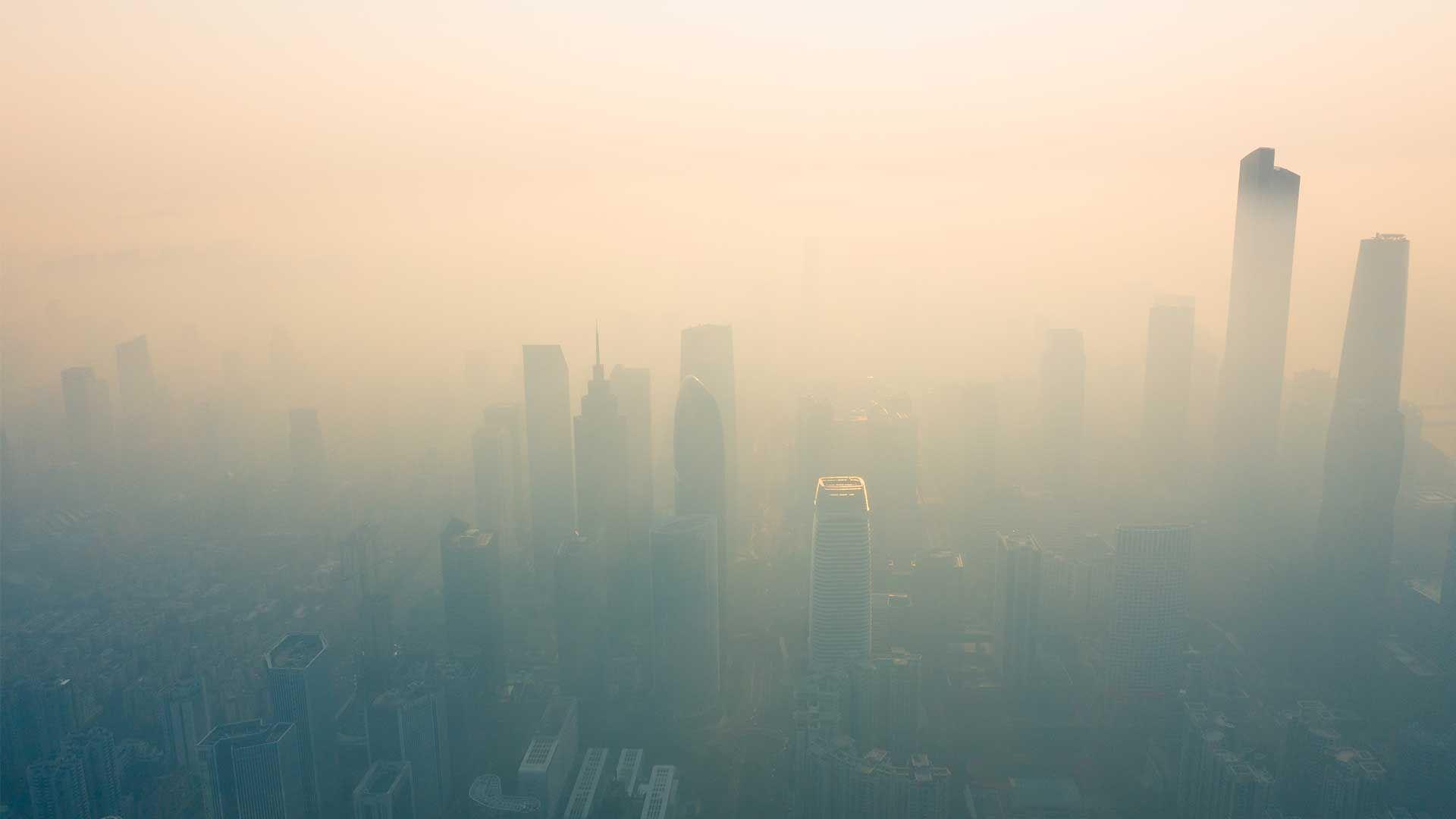
Air quality disputes tied to fires, explosions, and industrial emissions often come down to a simple question with big consequences: what did people actually breathe, and can you prove it with reliable science? In many cases, the real fight is not whether exposure modeling is valid in the abstract. It is whether the inputs, assumptions, and uncertainty handling actually fit the incident, the timing, and the locations at issue.
This is where atmospheric science, industrial hygiene, toxicology, and forensic reconstruction meet. And because modeling can do heavy lifting on exposure and causation, courts tend to look closely at it when it becomes central to a party’s proof.
In federal court, that scrutiny is usually framed through Rule 702. In plain terms, the witness must be qualified, and the proponent must show the testimony will help the factfinder, is based on sufficient facts or data, uses reliable principles and methods, and applies those methods reliably to the case. Daubert explains that reliability is assessed through a flexible inquiry, and that factors like testing, peer review, error rates, standards, and acceptance may be helpful depending on the context. Kumho confirms that the judge’s gatekeeping role applies to technical and other specialized testimony too, not just “pure science,” and that reliability depends on the task and field.
When an expert presents modeled estimates as if they were precise facts, rather than results that depend on stated assumptions and uncertainty, the analysis becomes much easier to challenge.
Why Air Modeling Matters in Emissions Litigation
In fire and industrial emissions cases, exposure modeling is often used as a bridge between an incident and the plaintiff’s claimed exposure. In practice, it can help estimate contaminant levels over time, evaluate where a plume likely traveled, and test whether airborne contaminants plausibly reached specific properties or neighborhoods.
In practical terms, modeling often shapes:
- Whether a downwind area was likely impacted
- Estimated concentration ranges over time
- How smoke or a chemical plume dispersed across geography
- Whether the opinion aligns with monitoring data and the broader regulatory context
- How exposure arguments connect to toxicology and medical causation
If that bridge is built on thin inputs or unexplained assumptions, causation can start to look speculative. That is typically when admissibility disputes become more serious, especially if the modeling is doing work that the rest of the evidence cannot do on its own.
The Scientific Backbone of Exposure Modeling
Courts are often not persuaded by conclusions alone. What matters is the path the expert took to get there, and whether the court can evaluate that path.
A helpful way to think about Rule 702 is as a set of practical checkpoints. Will the opinion help the factfinder? Is it based on sufficient facts or data? Are the principles and methods reliable? And were those methods applied reliably to the case facts? The point is not to win a debate about labels. The point is to show a defensible chain of reasoning from facts to conclusions.
A defensible exposure model typically pulls together several building blocks. The exact mix depends on the incident and the available data, but common components include:
- Meteorological reconstruction using historical weather station data and time-specific conditions
- Dispersion modeling (for example, Gaussian plume approaches or computational fluid dynamics)
- Source term estimation grounded in incident facts, combustion chemistry, or emissions inventories
- Time-weighted exposure calculations that reflect duration and variability
- Validation against field measurements, when measurements exist
The dispute is often not about the model’s name or its popularity. It is about the inputs, the model choice, and how uncertainty is handled. What was released, for how long, and under what conditions? If those inputs are thin, poorly documented, or only loosely tied to the record, the output becomes easier to attack as an unsupported leap.
A few reliability gaps show up repeatedly in litigation because they raise the same Rule 702 concerns about facts, method, and application:
- Assumptions about wind fields, burn rates, or release duration that are not supported by the record
- Missing documentation of data sources, parameters, or modeling steps
- No meaningful consideration of terrain effects or inversion conditions when they could matter
- Selective use of data that favors one conclusion while downplaying conflicting measurements
- No sensitivity analysis showing how results change when assumptions change, where feasible
A strong report usually lets another qualified scientist replicate the work in substance or independently audit it from the disclosed inputs, settings, and assumptions. If the workflow cannot be followed or meaningfully checked, it becomes harder to defend as reliable.
How Courts Evaluate Modeling Experts
In federal court, judges focus on whether the expert’s opinion is tied to sufficient facts and is the result of reliable methods that were reliably applied to the case facts. Even when a tool is widely used, the opinion can still fail if the inputs are weak, uncertainty is glossed over, or the expert uses the tool outside the boundaries it can support.
This is where task-specific relevance matters. A model may be reliable for one question and still be a poor match for the question being litigated. Kumho is a useful reminder here because it confirms that courts can scrutinize reliability for technical work, and that the reliability analysis depends on the discipline and the task. The key is whether the expert’s reasoning and methods are reliable for the job they are being asked to do.
In practice, these are the kinds of questions that tend to drive challenges:
- Was the model tied to site-specific information when that information was available?
- Did the expert test alternate scenarios and explain why the final scenario was chosen?
- Does the report disclose uncertainty in a way a factfinder can understand?
- Can the work be checked by another qualified expert using the same inputs?
- Does the opinion stay within the limits of the model, or does it reach past them?
One common warning sign is overconfidence. If a report reads like the model produced a single, exact answer, opposing counsel will usually press hard on uncertainty, variability, and sensitivity. A strong expert does not try to slide past those issues. They address them directly, explain what the model can and cannot conclude, and show how results shift under reasonable alternatives.
Transparency needs to be real, not just asserted. A defensible report typically identifies the model and version used, explains where the input data came from, lists key parameter choices and assumptions, and preserves run settings and outputs so the analysis can be checked, where feasible. That kind of clarity helps the court evaluate reliability and helps counsel understand what is truly being claimed.
Litigation Pitfalls That Lead to Exclusion
Many modeling disputes are less about whether modeling can be admissible in principle, and more about whether it was done reliably in this case.
High-risk mistakes often include:
- Using generic emissions factors when incident-specific data exists or can be reconstructed
- Minimizing or ignoring air monitoring results that do not match the modeled output
- Failing to document model selection, assumptions, and parameter choices
- Using regulatory compliance tools for a causation opinion without explaining fit and limitations
- Presenting bottom-line conclusions without showing calculations and uncertainty ranges
A common failure mode looks like this: the report adopts a convenient source term, burn rate, or release duration without tying it to logs, incident data, process records, or a defensible reconstruction. The model then produces clean-looking concentration contours that do not align with monitors, timing evidence, or other case facts, where monitoring exists. If the expert does not reconcile those conflicts and does not quantify uncertainty, the opinion can start to look more like argument than analysis.
These are the kinds of gaps that can become the centerpiece of a Rule 702 challenge in federal court. Courts may exclude an opinion when the expert’s conclusion is connected to the data only by the expert’s say-so, or when there is too great an analytical gap between the data and the opinion. Credentials do not repair that kind of break in the reasoning chain. The report has to show the work, and it has to connect the work to the facts in a way the court can evaluate.
Building a Defensible Expert Record
In emissions litigation, the strongest record is usually built early. Waiting too long to lock down inputs and preserve data can make the modeling look outcome-driven, especially if key facts are missing by the time the expert starts the work.
Defensible cases often share a few practical habits:
- Preserve incident records early, including process data, response logs, and monitoring results
- Confirm the provenance of model inputs and document what was used and why
- Keep a clear, step-by-step workflow that can be repeated or independently audited by another expert, where feasible
- Run sensitivity testing and disclose how results shift under reasonable alternatives
- Align the exposure analysis with toxicology and medical causation opinions, including limitations
If you can show the modeling was built to be tested, not shaped around a preferred conclusion, you are in a much stronger position when reliability becomes the focus.
Practical Guidance for Attorneys
The best way to reduce admissibility risk is to pressure-test the modeling early. These questions are designed to surface hidden assumptions before they turn into a courtroom problem.
Consider asking your expert for:
- A clear explanation of how uncertainty and variability are handled
- Peer-reviewed support or recognized standards showing why the approach matches the case question, and how those standards were applied here
- A complete list of inputs, data sources, and parameter choices
- A sensitivity analysis showing whether results change under alternative assumptions
- A plain-language statement of limitations, including what the model cannot conclude
- Examples of prior incident modeling work, including how the expert handled missing or conflicting data
- What record evidence supports the source term inputs (release rate, duration, and composition), and what ranges were tested
If an expert cannot explain these topics in a clear, grounded way, the report may not hold up under pressure, even if the expert is highly qualified.