Dental implants can restore chewing function, appearance, and stability after tooth loss, but implant placement is a surgical procedure with recognized risks. Complications may include infection, nerve injury, damage to nearby structures, implant failure, or problems with the position or function of the implant.
When an alleged dental implant injury leads to litigation, establishing that a complication occurred is usually only the beginning. The parties may also dispute whether the treatment met the applicable standard of care, whether appropriate diagnostic and treatment-planning steps were taken, what caused the patient's injury, and whether the outcome was a recognized complication rather than the result of negligence.
These questions often involve dental and medical issues outside ordinary experience. Qualified expert witnesses can therefore play an important role in helping attorneys, courts, and juries evaluate dental implant claims.
Dental Implant Injuries and Lawsuits
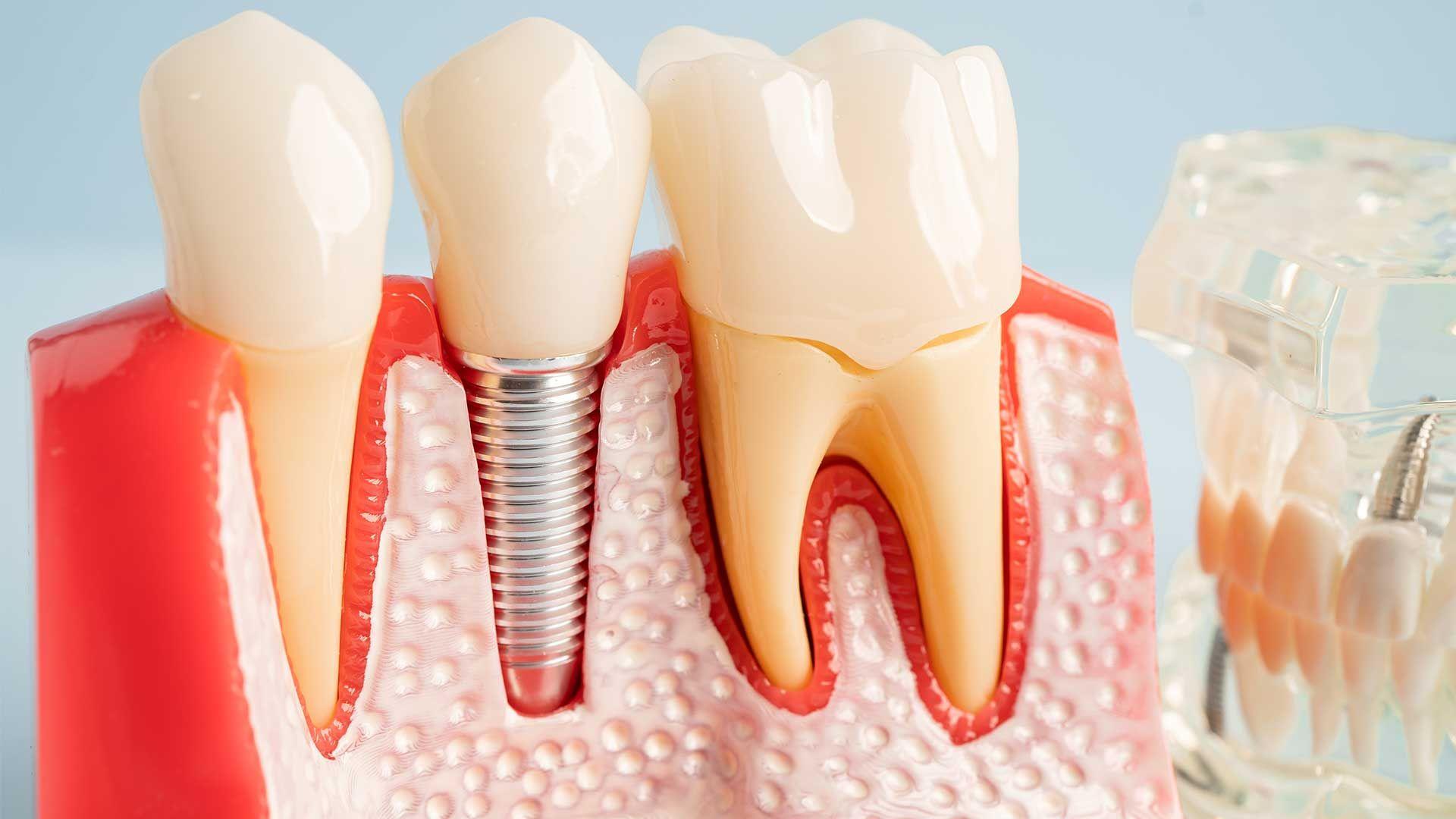
According to the U.S. Food and Drug Administration (FDA), a dental implant system includes a dental implant body and dental implant abutment and may also include an abutment fixation screw. The implant body is surgically inserted into the jawbone, while the abutment extends through the gums to support attached artificial teeth, such as crowns, bridges, or dentures.
Recognized risks associated with dental implant systems include:
- injury to surrounding natural teeth;
- damage to tissues during surgery, including sinus perforation;
- fracture of surrounding jawbone;
- bite or functional problems;
- loosening of an abutment screw;
- loosening or failure of the implant body;
- infection involving the supporting bone or gums;
- difficulty maintaining adequate oral hygiene around the implant; and
- postoperative numbness caused by nerve impingement or damage.
The presence of one of these complications does not, by itself, establish dental malpractice. An unfavorable result can occur even when treatment is appropriately planned and performed. Whether malpractice occurred generally requires analysis of the governing jurisdiction's substantive law and the particular facts surrounding the patient's care.
The central question is often not simply whether the patient suffered an injury, but whether the provider departed from the applicable professional standard and, if so, whether that departure caused the claimed harm.
Nerve Injury After Dental Implant Placement
Nerve injury can be a significant concern when implants are placed in the mandible. The inferior alveolar nerve, which arises from the mandibular division of the trigeminal nerve, and other sensory branches may be affected during implant-related procedures.
The FDA identifies postoperative numbness caused by nerve impingement or damage as a recognized risk associated with dental implant systems. Clinical literature also documents neuropathic complications following mandibular implant placement.
Symptoms may include:
- numbness or reduced sensation;
- tingling or abnormal sensation;
- burning or neuropathic pain;
- altered sensation involving the lip, chin, teeth, or gums; and
- persistent sensory disturbance.
In a lawsuit involving suspected nerve damage, the analysis may involve preoperative imaging, implant dimensions and positioning, anatomical relationships, operative records, postoperative symptoms, and subsequent treatment.
Postoperative numbness alone does not establish that an implant was negligently placed. A causation analysis may require comparison of preoperative imaging with implant dimensions and final position, the timing and distribution of symptoms, postoperative findings, and other possible explanations for the sensory changes.
Peri-Implant Disease, Bone Loss, and Implant Failure
Not every implant-related dispute involves an immediate surgical injury. Some complications develop over time.
Peri-implant mucositis involves inflammation in the soft tissues surrounding an implant without supporting bone loss. Peri-implantitis involves inflammation of the tissues surrounding an implant together with progressive loss or deterioration of supporting bone.
The American Academy of Periodontology (AAP) and Academy of Osseointegration (AO) have published consensus materials addressing the prevention and management of peri-implant diseases. Their work considers clinical and patient-related factors that can affect peri-implant health, including risk factors and implant- and prosthesis-related considerations.
When peri-implantitis or bone loss becomes an issue in litigation, case-specific evidence may include:
- the patient's periodontal history;
- oral hygiene and plaque control;
- implant positioning;
- prosthetic design;
- maintenance and follow-up;
- clinical signs of inflammation;
- radiographic evidence of bone loss;
- patient-specific risk factors; and
- the timing and adequacy of treatment after complications became apparent.
The presence of implant failure or disease does not establish its cause. Several factors may contribute to an unfavorable outcome, and expert analysis may be needed to determine which explanations are supported by the available evidence.
What Does an Expert Witness Evaluate in a Dental Implant Lawsuit?
The scope of an expert's work depends on the allegations and the witness's qualifications. In a dental implant malpractice case, an appropriately qualified dental professional may be asked to assess treatment planning, implant placement, postoperative management, standard of care, or causation.
Depending on the allegations and available evidence, counsel and the expert may consider materials such as:
- dental and medical histories;
- treatment plans and clinical notes;
- informed-consent documentation;
- periodontal records;
- radiographs and other available imaging;
- implant specifications and dimensions;
- surgical records;
- follow-up and maintenance records;
- records of corrective treatment; and
- deposition testimony or other case evidence.
A useful expert analysis does more than state that a complication should not have happened. It connects relevant professional principles to the patient's treatment and explains how the available evidence supports each opinion.
Standard of Care
A central question in many dental malpractice cases is whether the defendant's care departed from the professional standard applicable under the governing law.
Depending on the allegations, an expert may consider anatomy, available bone, periodontal condition, relevant patient factors, implant location, and other treatment-planning considerations. Whether any particular consideration bears on the applicable standard of care depends on the facts and governing law.
The precise legal standard varies by jurisdiction. Counsel should therefore confirm the applicable state law before determining what expert testimony is required and how the standard of care must be established.
Causation
A departure from the standard of care does not necessarily establish that the departure caused the patient's injury.
When a patient develops numbness after mandibular implant placement, for example, causation may turn on the implant's relationship to relevant anatomy, the timing of symptoms, imaging findings, clinical examinations, and reasonable alternative explanations.
Similarly, an implant that eventually fails may involve infection, impaired healing, periodontal disease, mechanical factors, or other circumstances. A well-supported opinion should distinguish conclusions that can reasonably be drawn from the evidence from possibilities that the available records cannot reliably establish.
Some dental implant lawsuits include allegations involving informed consent in addition to claims of negligent treatment.
These issues are related but distinct. A signed consent form may be relevant evidence, but the legal requirements governing informed consent vary among jurisdictions. Likewise, the fact that an injury is a recognized complication does not automatically resolve a separate allegation that the procedure was negligently planned or performed.
A recent New York appellate decision provides a useful illustration of how these issues can arise under that state's law. In Kormusis v. Goldenberg (2025), the plaintiff alleged negligent implant placement, failure to detect an infection earlier, and lack of informed consent. The defendants moved for summary judgment and submitted expert evidence addressing the dental treatment and alleged departures from accepted practice. The Appellate Division affirmed summary judgment for the defendants. With respect to the dental malpractice claims, the court concluded that the plaintiff's expert affirmation was speculative and conclusory and relied on factual assumptions that were not supported by the evidence. The court separately upheld dismissal of the lack-of-informed-consent claim based on the evidentiary record before it.
The decision highlights a practical litigation point: an expert opinion may be insufficient when it is speculative, conclusory, or based on factual assumptions that are not supported by the record.
Dental Implant Product Liability and Device Issues
Some implant cases may raise questions about the dental implant system itself rather than, or in addition to, the clinical care provided.
The FDA regulates dental implant systems as medical devices and encourages reporting of problems involving implant bodies, abutments, and abutment screws through its MedWatch program.
Whether an alleged device problem supports a product liability claim, and what elements must be established, depends on applicable substantive law. Depending on the allegations, counsel may need to consider whether the disputed questions are primarily clinical or involve technical issues concerning the device or its components.
If a case raises specialized engineering or materials questions, a witness with qualifications in those fields may be appropriate in addition to, or instead of, a clinical expert. A clinician qualified to discuss implant surgery is not necessarily qualified to offer engineering, manufacturing, or materials-science opinions.
Rule 702 and Dental Implant Expert Testimony
In federal proceedings governed by the Federal Rules of Evidence, expert testimony is subject to Rule 702.
Under the current rule, a witness must be qualified as an expert by knowledge, skill, experience, training, or education, and the proponent must demonstrate to the court that it is more likely than not that Rule 702's admissibility requirements are satisfied. Among other requirements, the expert's scientific, technical, or other specialized knowledge must help the trier of fact understand the evidence or determine a fact in issue, the testimony must be based on sufficient facts or data and be the product of reliable principles and methods, and the expert's opinion must reflect a reliable application of those principles and methods to the facts of the case.
The 2023 amendment clarified and emphasized that the proponent must demonstrate to the court that it is more likely than not that the Rule 702 admissibility requirements are satisfied, consistent with Rule 104(a). The amendment also revised Rule 702(d) to require that the expert's opinion reflect a reliable application of the expert's principles and methods to the facts of the case.
Applying these principles to a dental implant case, counsel may want to examine whether an expert:
- relies on assumptions contradicted by the clinical record;
- explains how imaging or other evidence supports the opinion;
- treats a recognized complication as proof of negligence without further analysis;
- addresses plausible alternative causes when they are material to the opinion;
- stays within the expert's demonstrated field of expertise; and
- expresses conclusions at a level of certainty the methodology and evidence can reliably support.
State courts apply their own evidence rules and standards for expert testimony. Federal Rule 702 should therefore not be presented as controlling in every dental malpractice action.
Selecting an Expert for a Dental Implant Lawsuit
The appropriate professional depends on the technical question in dispute.
Depending on the case, counsel might consider a periodontist, oral and maxillofacial surgeon, prosthodontist, general dentist with relevant implant experience, radiologist, physician with relevant expertise in nerve injury, or another appropriately qualified professional. Cases involving specialized device questions may call for technical expertise outside clinical dentistry.
Attorneys evaluating a potential expert may consider:
- education, licensure, and specialized training;
- experience relevant to the procedure or issue in dispute;
- familiarity with the type of complication alleged;
- experience interpreting relevant diagnostic evidence;
- ability to distinguish recognized complications from evidence of an alleged departure from the applicable standard of care;
- familiarity with relevant professional literature and clinical guidance; and
- ability to explain the reasoning connecting the evidence to each opinion.
Counsel should match each proposed opinion to the expert's actual qualifications. One expert may not be suited to address every clinical, neurologic, radiologic, engineering, or device-related issue in a complex case.
Conclusion
Dental implant injury litigation often involves more than determining whether an implant failed or a patient experienced a complication. A case may require careful analysis of treatment planning, anatomy, surgical technique, postoperative care, peri-implant disease, informed consent, device performance, and causation.
Expert witnesses can help connect these technical issues to the evidence. Their effectiveness, however, depends on more than professional credentials. Strong expert testimony should stay within the witness's area of expertise, rely on sufficient case-specific facts, and clearly explain how those facts support the opinions offered.
For attorneys handling dental implant injury claims, identifying disputed technical questions early can help determine which experts may be needed and which clinical records, imaging, implant information, and other evidence may be important for meaningful expert analysis.