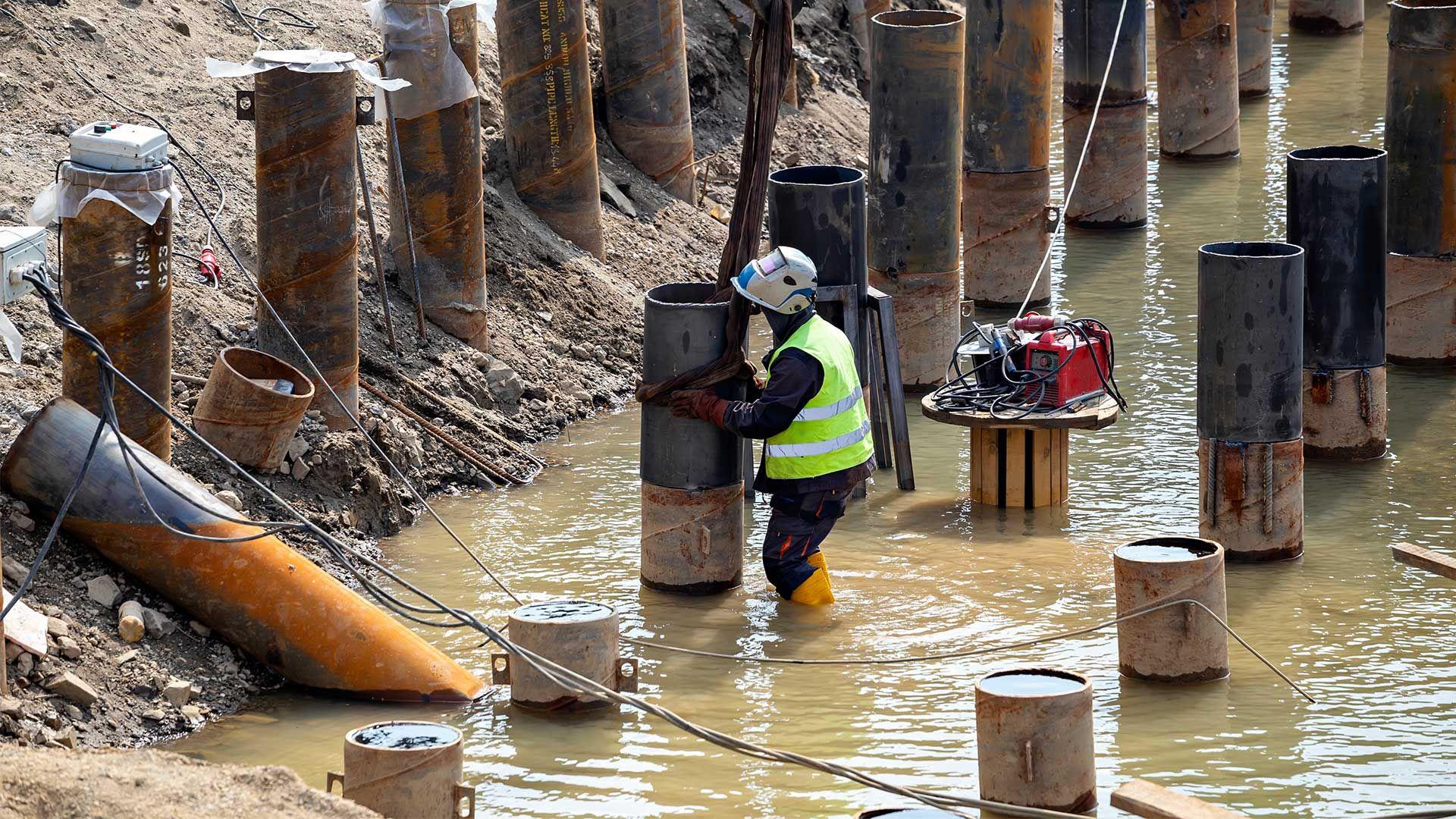
Construction dewatering is a critical part of many infrastructure and commercial construction projects. Whether a project involves deep foundations, underground transit systems, utility corridors, tunnels, or large mixed-use developments, groundwater can quickly become a major challenge. If it is not managed properly, projects may face excavation instability, flooding, settlement problems, project delays, regulatory compliance issues, and costly disputes.
That pressure has increased as more construction moves into dense urban areas with complicated subsurface conditions. On many modern projects, dewatering involves much more than simply pumping water out of an excavation. Engineers may use groundwater modeling, monitoring systems, pumping controls, and treatment planning to manage changing site conditions and reduce project risks.
For attorneys handling construction, infrastructure, environmental, or professional negligence matters, dewatering issues can become central to disputes involving causation, delay claims, property damage, regulatory compliance, and standard of care questions.
Understanding Construction Dewatering and Groundwater Management
Construction dewatering refers to removing or controlling groundwater and surface water so excavation and construction work can proceed safely.
Groundwater usually becomes a concern once excavation extends below the natural water table. Without proper groundwater control, water infiltration can weaken soils, destabilize excavation walls, interfere with equipment operations, and increase the risk of structural failures or worker injuries.
Dewatering systems may be used on projects involving:
- Deep foundations
- Underground transportation systems
- Utility and pipeline installation
- Bridge and marine construction
- Basement and parking structure excavation
- Mining and industrial facilities
- Environmental remediation work
In practice, dewatering decisions can affect far more than the excavation itself. Engineers must consider how groundwater movement may affect nearby buildings, utilities, roads, retaining systems, and surrounding soil conditions.
That becomes especially important in dense urban environments where even relatively small groundwater changes may affect neighboring structures. In litigation, those impacts often become the focus of disputes involving settlement damage, construction delays, or allegations of negligent site management.
Why Groundwater Control Matters
Groundwater conditions can influence nearly every phase of a construction project, from early site planning through excavation, foundation work, and scheduling.
When groundwater is not properly controlled, the consequences can become expensive very quickly. Problems may include:
- Excavation collapse
- Soil instability and erosion
- Hydrostatic uplift
- Settlement or subsidence
- Damage to nearby buildings or utilities
- Construction delays
- Environmental contamination concerns
- Increased project costs
- Worker safety risks
On urban projects, aggressive pumping can sometimes lower groundwater levels outside the project boundaries. That process, often referred to as groundwater drawdown, may cause surrounding soils to consolidate and settle.
For attorneys, this issue frequently appears in disputes involving cracked foundations, roadway movement, retaining wall problems, or claims that excavation work damaged neighboring property.
A common example involves deep downtown excavations supported by multiple deep wells. If groundwater levels drop too far near older buildings with shallow foundations, nearby owners may later claim the project contributed to settlement-related damage. In those cases, the litigation often centers on whether the project team properly investigated subsurface conditions, monitored groundwater impacts, and adjusted operations as site conditions changed.
Environmental compliance can also become a major issue. Extracted groundwater may contain sediment, hydrocarbons, heavy metals, or other contaminants. If water is discharged into regulated stormwater systems or waterways, permit conditions or treatment requirements may apply depending on the site conditions and discharge location. Because of these risks, dewatering design often involves coordination among geotechnical engineers, hydrogeologists, environmental consultants, contractors, and regulatory agencies.
Common Construction Dewatering Methods
Several conventional dewatering methods remain widely used today. The appropriate system depends on groundwater conditions, excavation depth, soil permeability, and overall project design.
Wellpoint Systems
Wellpoint systems use a series of shallow wells connected to a vacuum pumping system.
These systems are commonly associated with shallow groundwater control and more permeable soils. Contractors often use them on smaller excavations or projects where groundwater conditions are relatively manageable.
Deep Well Systems
Deep well systems use submersible pumps installed inside drilled wells surrounding the excavation area.
These systems are often considered where deeper groundwater control or larger groundwater volumes are expected. Large commercial developments and deep excavations may require this type of approach to maintain dry and stable working conditions.
Sump Pumping Systems
Sump systems collect groundwater in temporary pits or trenches where pumps remove accumulated water from the excavation.
These systems are usually simpler and less expensive than some other methods. However, they may not be appropriate in unstable soils or locations where erosion becomes a concern.
Eductor or Ejector Systems
Eductor systems use high-pressure water circulation to create suction within wells.
They may be useful in more challenging or lower-permeability ground conditions where conventional wellpoint systems are less effective. At the same time, eductor systems can be more complicated to design and operate than simpler dewatering setups.
Modern Innovations in Construction Dewatering Technology
As projects become more complex, many construction teams are using more advanced tools to manage groundwater conditions and reduce risk.
Real-Time Groundwater Monitoring
On larger or more technically demanding projects, teams may use automated monitoring systems to track changing groundwater conditions throughout construction.
Depending on the project, monitoring may include:
- Groundwater-level instruments
- Pump-performance records
- Settlement monitoring tools
Continuous monitoring allows project teams to identify changing conditions earlier and respond before problems become more serious. From a litigation perspective, monitoring records can become extremely important. In many disputes, project documentation becomes one of the key pieces of evidence. A detailed monitoring record may help show whether engineers responded reasonably to changing site conditions and followed accepted engineering practices during construction.
Predictive Groundwater Modeling
Hydrogeologic modeling has become an important planning tool on many modern projects.
Engineers may use predictive models to evaluate:
- Groundwater flow patterns
- Aquifer behavior
- Drawdown impacts
- Seasonal groundwater variation
- Possible effects on nearby structures
This becomes particularly important on dense urban projects, tunneling work, coastal developments, and environmentally sensitive sites where groundwater conditions can affect surrounding infrastructure.
Disputes sometimes arise over whether groundwater impacts should have been anticipated during project planning. In those cases, experts may evaluate whether the project team relied on sufficient site investigation data, reasonable hydrogeologic assumptions, and accepted modeling methods.
Building Information Modeling (BIM) Integration
Some large infrastructure projects coordinate dewatering information with digital project models or BIM workflows.
This may help teams visualize groundwater behavior alongside excavation sequencing, utility conflicts, soil conditions, and structural interactions.
In practice, combining groundwater information with digital construction models may help teams identify coordination issues earlier and improve communication among contractors, engineers, and project owners.
Those digital records may later become important in disputes involving project planning decisions, sequencing conflicts, or groundwater management problems.
Smart Pumping and Automated Control Systems
Many projects now use automated pumping controls and remote monitoring tools to help crews respond more quickly when groundwater conditions begin changing unexpectedly.
Depending on the project, these systems may include:
- Flow controls
- Remote monitoring capabilities
- Pump-performance tracking
- Energy-use monitoring
These systems can help maintain more consistent groundwater control while reducing unnecessary energy use and equipment strain.
Operational records generated by these systems may later become important evidence in disputes involving pump failures, flooding events, or contractor performance issues.
Sustainable Water Treatment and Water Reuse
Environmental concerns continue to shape how many projects approach groundwater management.
Groundwater extracted during excavation may contain:
- Sediment
- Petroleum hydrocarbons
- Heavy metals
- Industrial contaminants
- Naturally occurring constituents that may require evaluation
When groundwater is discharged into regulated systems or waterways, treatment requirements or permit conditions may apply.
Depending on the site conditions, treatment planning may involve sediment control, filtration, or other measures intended to address contamination concerns and discharge requirements.
Some projects also evaluate whether treated groundwater can be reused for approved construction or site-management purposes.
Environmental and Regulatory Issues
Construction dewatering may trigger environmental and regulatory obligations at the federal, state, or local level depending on the project, discharge location, and site conditions.
Depending on the circumstances, compliance issues may involve:
- Clean Water Act requirements for regulated discharges
- NPDES permitting where applicable
- Stormwater discharge regulations
- Wetland protection requirements
- Groundwater contamination concerns
- Local discharge permits
For attorneys, these issues often become important when projects encounter contaminated groundwater near industrial facilities, former manufacturing sites, or landfills. Failure to comply with environmental requirements may lead to regulatory enforcement actions, additional remediation costs, project delays, or related disputes.
In some cases, the dispute centers on who should bear responsibility for contamination handling costs, treatment system failures, or unauthorized discharges. Those disputes frequently involve competing expert opinions regarding contaminant migration, causation, and regulatory compliance.
Common Litigation Issues Involving Construction Dewatering
Dewatering disputes can arise in commercial, industrial, and infrastructure projects, particularly when groundwater conditions affect neighboring properties or project schedules.
Depending on the facts, disputes may involve allegations such as:
- Negligent groundwater management
- Improper dewatering system design
- Construction delays
- Excessive settlement or subsidence
- Damage to adjacent structures
- Environmental contamination
- Breach of contract
- Failure to comply with permit requirements
For example, neighboring property owners may claim excessive groundwater pumping caused settlement damage, roadway movement, or utility failures. Contractors, meanwhile, may argue that unforeseen groundwater conditions increased project costs or delayed construction beyond the original schedule.
These disputes often focus on whether project teams acted reasonably under the circumstances and followed accepted engineering and construction practices.
The Role of Expert Witnesses in Dewatering Disputes
Construction dewatering litigation may involve testimony from multiple technical experts depending on the issues in dispute.
Attorneys may consider experts such as:
These experts may analyze:
- Dewatering system design
- Soil and groundwater conditions
- Pumping records
- Monitoring data
- Regulatory compliance
- Standard of care issues
- Construction sequencing
- Causation of settlement or damage
Groundwater behavior can be difficult for judges, juries, and arbitrators to evaluate without technical explanation. As a result, expert testimony often becomes one of the central issues in these cases.
Experts are frequently asked not only to explain potential engineering failures, but also to reconstruct changing site conditions over time using monitoring records, pumping data, and geotechnical information collected during construction.
How Courts Evaluate Dewatering Expert Testimony
In federal court, and in many state courts, engineering expert testimony must satisfy reliability and relevance standards before it may be presented at trial. Under Rule 702 of the Federal Rules of Evidence, expert testimony must be based on sufficient facts, reliable methods, and reliable application of those methods to the facts of the case.
In dewatering disputes, courts may evaluate:
- The quality of site investigation data
- Reliability of groundwater modeling
- Adequacy of monitoring practices
- Compliance with accepted engineering standards
- Whether experts relied on accepted hydrogeologic methods
- The connection between the alleged conduct and claimed damages
Experts who rely on unsupported assumptions, incomplete investigations, or speculative causation theories may face admissibility challenges.
Courts also often examine whether expert conclusions are supported by actual project data rather than broad engineering theories alone.
Practical Risk-Reduction Steps for Construction Dewatering
Construction teams often use proactive planning and risk-management strategies to reduce groundwater-related problems and limit litigation exposure.
Conduct Thorough Site Investigations
Detailed geotechnical and hydrogeologic investigations help identify groundwater conditions before excavation begins.
Use Ongoing Monitoring
Real-time monitoring helps teams identify changing groundwater conditions early and respond before problems worsen.
Coordinate With Adjacent Property Owners
Early communication with neighboring stakeholders may help reduce disputes involving settlement concerns, vibration complaints, or infrastructure impacts.
Maintain Detailed Project Records
Accurate records of groundwater conditions, monitoring data, and pumping operations may later become critical evidence during litigation.
Address Environmental Compliance Early
Coordinating with environmental regulators early in the project may help avoid permitting delays, treatment issues, and compliance disputes later on.
Conclusion
Construction dewatering today involves far more than removing water from an excavation. Many projects now require careful groundwater management planning that balances engineering performance, environmental compliance, worker safety, project scheduling, and litigation risk.
Tools such as groundwater modeling, monitoring systems, automated pumping controls, and treatment planning can help teams manage difficult site conditions more effectively. Even so, dewatering failures can still lead to costly disputes involving settlement damage, environmental contamination, project delays, and allegations of professional negligence.
For attorneys handling these matters, understanding the engineering principles behind groundwater management is often essential when evaluating causation, liability, and damages.
Working with qualified engineering and hydrogeology experts may help legal teams analyze technical evidence, assess compliance with accepted standards of care, and explain complex groundwater issues clearly during litigation.