Software Engineering, +4
Automotive
Loading
Automotive
8 min read
Areas of Expertise :
Automotive, Automotive Engineering, Fuel Systems, Fire Origin & Cause, Product Liability

Published Date:
Last Modified Date:
Jurisdiction:
Georgia State
Chrysler Group LLC v. Walden involved a wrongful death and product liability lawsuit arising from a fatal rear-impact fire in a 1999 Jeep Grand Cherokee. Four-year-old Remington Cole Walden died after a pickup truck driven by Bryan Harrell struck the Jeep from behind and the vehicle caught fire.
Remington’s parents alleged that Chrysler’s fuel-system design and warnings were defective. Chrysler denied liability and argued that the Grand Cherokee complied with applicable federal safety standards, that similar fuel-tank locations were used in other vehicles from the same period, and that the crash resulted from another driver’s rear-end collision.
The litigation also required the plaintiffs to address Georgia’s product-liability statute of repose because the Jeep was more than ten years old when the crash occurred. The dispute moved from trial to post-trial remittitur and appellate review, ending with the Georgia Supreme Court’s 2018 decision affirming the judgment.
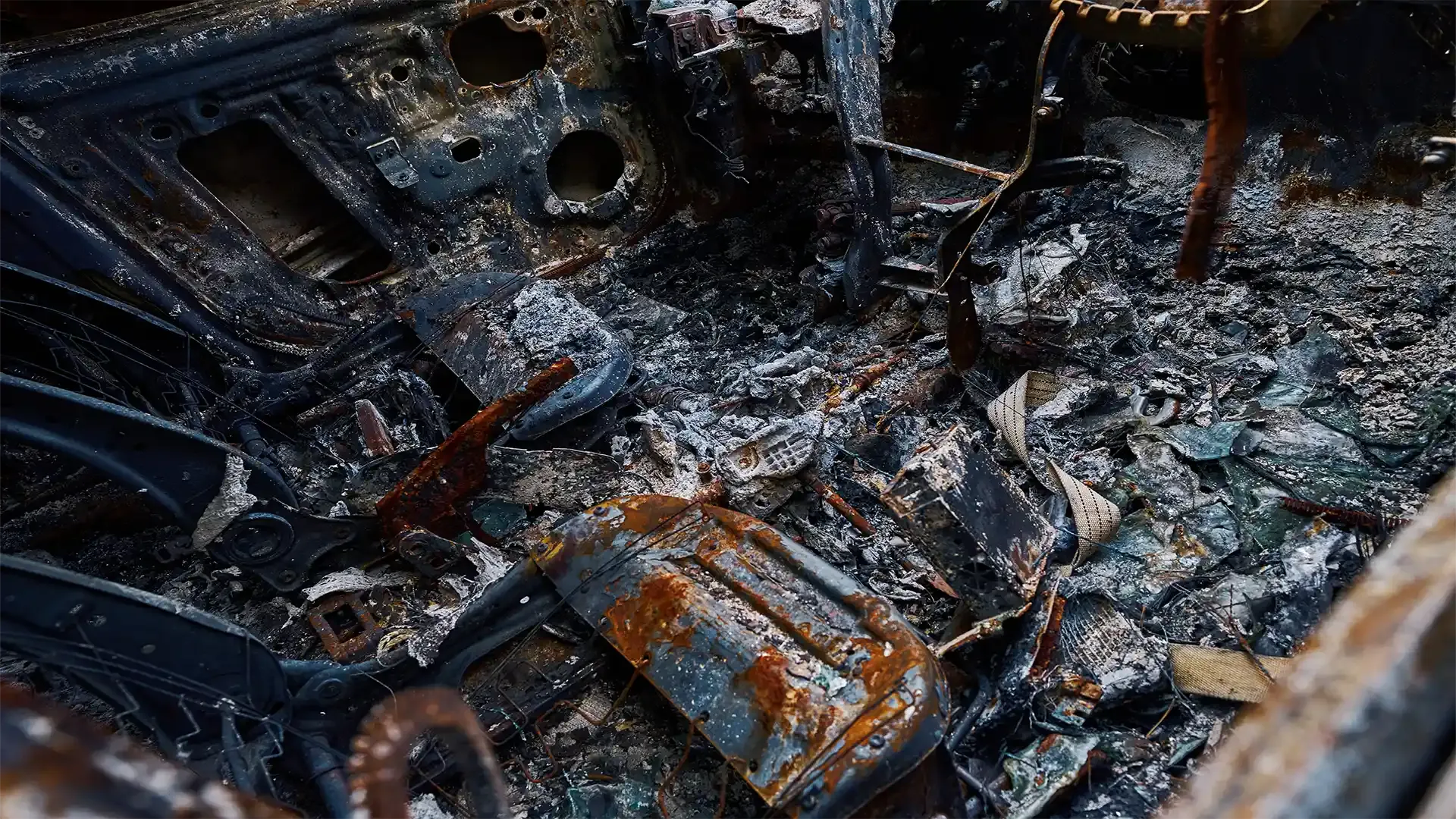
The dispute began with a rear-end collision in Georgia. Four-year-old Remington Walden was seated in the rear of a 1999 Jeep Grand Cherokee when Bryan Harrell’s pickup truck struck the vehicle from behind. The impact damaged the Jeep’s rear fuel system, the vehicle caught fire, and Remington died from burn injuries.
The crash led to the wrongful death and product liability lawsuit against Chrysler and Harrell.
After the crash, Remington’s parents filed a wrongful death lawsuit against Chrysler Group LLC and Bryan Harrell. The complaint alleged defects in Chrysler’s vehicle design, warnings, and handling of prior fuel-system concerns.
The plaintiffs alleged that the rear-mounted fuel tank in the 1999 Jeep Grand Cherokee created an unreasonable fire risk in rear-impact crashes. Chrysler denied liability and maintained that the vehicle complied with applicable federal safety standards.
The National Highway Traffic Safety Administration’s Office of Defects Investigation reviewed rear-impact fuel-tank integrity concerns involving several Jeep models and model years. The investigation record included Defect Petition DP09-005, Preliminary Evaluation PE10-031, Engineering Analysis EA12-005, and Fatality Analysis Reporting System data.
ODI opened the engineering analysis on June 12, 2012, issued a recall request letter on June 3, 2013, and closed the investigation on November 14, 2014.
Chrysler proposed Recall 13V-252 for model-year 1993–1998 Jeep Grand Cherokee and model-year 2002–2007 Jeep Liberty vehicles. For model-year 1999–2004 Jeep Grand Cherokee vehicles, Chrysler indicated that it would conduct a customer satisfaction campaign involving inspection of vehicles equipped with aftermarket tow hitch receivers and replacement where needed.
The 1999 Jeep Grand Cherokee involved in Walden fell within the 1999–2004 Grand Cherokee group. ODI treated that group differently from the recalled 1993–1998 Grand Cherokee and 2002–2007 Liberty groups.
At trial, the plaintiffs presented evidence concerning vehicle design, warnings, and Chrysler’s knowledge of prior safety concerns. Chrysler relied on federal compliance arguments, crash-causation evidence, and Georgia’s statute of repose.
Because the Jeep was more than ten years old when the crash occurred, the plaintiffs had to prove conduct beyond ordinary negligence. The jury found that Chrysler acted with reckless or wanton disregard for human life and failed to warn of the hazard.
The jury awarded $120 million in wrongful death damages and $30 million for pain and suffering, for a total verdict of $150 million. It assigned 99 percent of fault to Chrysler and 1 percent to Harrell.
The damages amount and fault allocation were later reviewed during post-trial proceedings and appeals.
After the verdict, the trial court reduced the damages award. The final remitted judgment consisted of $30 million for wrongful death and $10 million for pain and suffering, for a total of $40 million.
Chrysler continued to challenge the judgment through the appellate process.
The Georgia Court of Appeals affirmed the trial court’s judgment, allowing the reduced $40 million award to remain in place. Chrysler then sought review before the Georgia Supreme Court.
The Georgia Supreme Court affirmed the judgment in 2018. The court addressed whether evidence about Chrysler CEO Sergio Marchionne’s compensation could be considered in relation to potential witness bias.
The court held that executive compensation evidence is not automatically admissible or inadmissible and must be reviewed under ordinary evidentiary balancing rules. Because Chrysler had not preserved the specific objection in the same way at trial, the court reviewed the issue for plain error and found no basis to reverse.
Court:
Supreme Court of Georgia
Case Name:
Chrysler Group LLC n/k/a FCA US LLC v. Walden et al.
Automotive Fire Cause and Origin
Accident Investigation and Reconstruction
Automotive Recall
Crash Tests
Design Defect
Product Failure
Product Safety
Safety Warnings
Transportation Safety
Automotive Industry
Chrysler Group LLC v. Walden involved a wrongful death and product liability lawsuit arising from a fatal rear-impact fire in a 1999 Jeep Grand Cherokee. Four-year-old Remington Cole Walden died after a pickup truck driven by Bryan Harrell struck the Jeep from behind and the vehicle caught fire.
Remington’s parents alleged that Chrysler’s fuel-system design and warnings were defective. Chrysler denied liability and argued that the Grand Cherokee complied with applicable federal safety standards, that similar fuel-tank locations were used in other vehicles from the same period, and that the crash resulted from another driver’s rear-end collision.
The litigation also required the plaintiffs to address Georgia’s product-liability statute of repose because the Jeep was more than ten years old when the crash occurred. The dispute moved from trial to post-trial remittitur and appellate review, ending with the Georgia Supreme Court’s 2018 decision affirming the judgment.
The dispute began with a rear-end collision in Georgia. Four-year-old Remington Walden was seated in the rear of a 1999 Jeep Grand Cherokee when Bryan Harrell’s pickup truck struck the vehicle from behind. The impact damaged the Jeep’s rear fuel system, the vehicle caught fire, and Remington died from burn injuries.
The crash led to the wrongful death and product liability lawsuit against Chrysler and Harrell.
After the crash, Remington’s parents filed a wrongful death lawsuit against Chrysler Group LLC and Bryan Harrell. The complaint alleged defects in Chrysler’s vehicle design, warnings, and handling of prior fuel-system concerns.
The plaintiffs alleged that the rear-mounted fuel tank in the 1999 Jeep Grand Cherokee created an unreasonable fire risk in rear-impact crashes. Chrysler denied liability and maintained that the vehicle complied with applicable federal safety standards.
The National Highway Traffic Safety Administration’s Office of Defects Investigation reviewed rear-impact fuel-tank integrity concerns involving several Jeep models and model years. The investigation record included Defect Petition DP09-005, Preliminary Evaluation PE10-031, Engineering Analysis EA12-005, and Fatality Analysis Reporting System data.
ODI opened the engineering analysis on June 12, 2012, issued a recall request letter on June 3, 2013, and closed the investigation on November 14, 2014.
Chrysler proposed Recall 13V-252 for model-year 1993–1998 Jeep Grand Cherokee and model-year 2002–2007 Jeep Liberty vehicles. For model-year 1999–2004 Jeep Grand Cherokee vehicles, Chrysler indicated that it would conduct a customer satisfaction campaign involving inspection of vehicles equipped with aftermarket tow hitch receivers and replacement where needed.
The 1999 Jeep Grand Cherokee involved in Walden fell within the 1999–2004 Grand Cherokee group. ODI treated that group differently from the recalled 1993–1998 Grand Cherokee and 2002–2007 Liberty groups.
At trial, the plaintiffs presented evidence concerning vehicle design, warnings, and Chrysler’s knowledge of prior safety concerns. Chrysler relied on federal compliance arguments, crash-causation evidence, and Georgia’s statute of repose.
Because the Jeep was more than ten years old when the crash occurred, the plaintiffs had to prove conduct beyond ordinary negligence. The jury found that Chrysler acted with reckless or wanton disregard for human life and failed to warn of the hazard.
The jury awarded $120 million in wrongful death damages and $30 million for pain and suffering, for a total verdict of $150 million. It assigned 99 percent of fault to Chrysler and 1 percent to Harrell.
The damages amount and fault allocation were later reviewed during post-trial proceedings and appeals.
After the verdict, the trial court reduced the damages award. The final remitted judgment consisted of $30 million for wrongful death and $10 million for pain and suffering, for a total of $40 million.
Chrysler continued to challenge the judgment through the appellate process.
The Georgia Court of Appeals affirmed the trial court’s judgment, allowing the reduced $40 million award to remain in place. Chrysler then sought review before the Georgia Supreme Court.
The Georgia Supreme Court affirmed the judgment in 2018. The court addressed whether evidence about Chrysler CEO Sergio Marchionne’s compensation could be considered in relation to potential witness bias.
The court held that executive compensation evidence is not automatically admissible or inadmissible and must be reviewed under ordinary evidentiary balancing rules. Because Chrysler had not preserved the specific objection in the same way at trial, the court reviewed the issue for plain error and found no basis to reverse.
Automotive Engineering Expert Witness
Automotive engineering analysis can examine the design and protection of a vehicle’s fuel system during rear-impact collisions. In a dispute involving a 1999 Jeep Grand Cherokee, this work may include review of fuel-tank placement, rear-structure design, crash energy management, and whether alternative fuel-system layouts or protective structures were feasible.
Accident Reconstruction Expert Witness
Accident reconstruction analysis can review how the collision occurred and what forces acted on the Jeep during the rear impact. Relevant work may include vehicle speeds, impact angle, crush patterns, roadway evidence, driver conduct, and whether the impact sequence was consistent with fuel-system damage and post-collision fire claims.
Fire Cause and Origin Investigation Expert Witness
Fire cause and origin analysis can assess how a post-collision vehicle fire began and spread. In a rear-impact fuel-system case, this work may include examining whether fuel leakage contributed to ignition, where the fire likely started, and how physical crash damage, fuel-system failure, ignition sources, and burn injury claims connect.
Human Factors and Warning Expert Witness
Human factors and warning analysis can evaluate whether vehicle users received adequate information about known hazards. In litigation involving alleged failure to warn, this work may address the content, timing, clarity, and practical effect of warnings about rear-impact fuel-system risks.
Automotive Safety and Regulatory Compliance Expert Witness
Automotive safety and regulatory compliance analysis can review federal motor vehicle safety standards, recall materials, NHTSA investigation records, and manufacturer safety practices. In Chrysler v. Walden, this type of analysis connects Chrysler’s federal compliance arguments with the plaintiffs’ state-law product-liability claims.
Jeep Grand Cherokee Rear Fuel-Tank Claims and Crashworthiness
The crashworthiness issue focused on whether the Jeep’s fuel system provided reasonable protection during a foreseeable rear-impact collision. The claim focused on the design and protection of the rear fuel system during the collision.
Georgia’s Product-Liability Statute of Repose
Georgia’s product-liability statute of repose required the plaintiffs to prove more than ordinary negligence because of the vehicle’s age. The key legal issue was whether the evidence supported the exception for willful, reckless, or wanton disregard for life or property.
Federal Motor Vehicle Safety Compliance
Federal safety compliance was central to Chrysler’s defense, but it did not end the state-law product-liability analysis. The case required consideration of how regulatory compliance interacted with design-defect and failure-to-warn claims under Georgia law.
NHTSA Fuel-Tank Investigation Materials
The NHTSA/ODI materials addressed Jeep rear-impact fuel-tank concerns across different model years. The 1999–2004 Grand Cherokee group was handled differently from the recalled 1993–1998 Grand Cherokee and 2002–2007 Liberty groups.
Evidence, Trial Procedure, and Witness Bias on Appeal
The Georgia Supreme Court’s evidentiary analysis focused on how trial courts should evaluate executive compensation evidence offered to show possible witness bias. The ruling addressed preservation, plain-error review, and ordinary evidentiary balancing rather than the underlying crash mechanics.
Chrysler Group LLC v. Walden moved from a fatal March 2012 rear-impact fire to a wrongful death and product liability trial centered on the 1999 Jeep Grand Cherokee’s fuel-system design, warning evidence, and Chrysler’s knowledge of prior safety concerns. The jury accepted the plaintiffs’ claims, awarded $150 million, and assigned 99 percent of fault to Chrysler.
After trial, the court reduced the award to $40 million, consisting of $30 million for wrongful death and $10 million for pain and suffering. Chrysler continued to challenge the judgment, including liability findings, Georgia’s statute-of-repose exception, damages, and trial rulings involving evidence and witness bias.
The Georgia Court of Appeals affirmed the reduced judgment, and the Georgia Supreme Court later affirmed after reviewing the disputed evidentiary issue involving executive compensation evidence. The litigation ended with the $40 million judgment against Chrysler left in place.

What vehicle was involved in Chrysler Group LLC v. Walden?
The case involved a 1999 Jeep Grand Cherokee. Four-year-old Remington Walden was seated in the rear of the vehicle when it was struck from behind by a pickup truck in Georgia. The collision damaged the Jeep’s rear fuel system, and the vehicle caught fire.
What happened to the Jeep Grand Cherokee’s fuel system during the crash?
The rear impact damaged the Jeep Grand Cherokee’s rear fuel system, and the vehicle caught fire after the collision. The plaintiffs argued that the fuel tank was not adequately protected in a foreseeable rear-impact crash. Chrysler disputed liability and maintained that the Grand Cherokee complied with applicable federal safety standards.
What did the jury decide against Chrysler?
The jury found that Chrysler acted with reckless or wanton disregard for human life and failed to warn of the hazard that caused Remington Walden’s death. It assigned 99 percent of fault to Chrysler and 1 percent to Bryan Harrell, the driver who struck the Jeep from behind.
How much money was awarded in Chrysler v. Walden?
The jury initially awarded $150 million, consisting of $120 million for wrongful death and $30 million for pain and suffering. The trial court later reduced the total award to $40 million, with $30 million for wrongful death and $10 million for pain and suffering.
What did the Georgia Supreme Court decide in Chrysler Group LLC v. Walden?
The Georgia Supreme Court affirmed the judgment against Chrysler in 2018. The court reviewed several issues, including whether evidence concerning Chrysler CEO Sergio Marchionne’s compensation could be considered in relation to witness bias. The court held that such evidence must be evaluated under ordinary evidentiary balancing principles and found no basis to reverse the judgment under the standard of review applied.
Automotive Engineering Expert Witness
Automotive engineering analysis can examine the design and protection of a vehicle’s fuel system during rear-impact collisions. In a dispute involving a 1999 Jeep Grand Cherokee, this work may include review of fuel-tank placement, rear-structure design, crash energy management, and whether alternative fuel-system layouts or protective structures were feasible.
Accident Reconstruction Expert Witness
Accident reconstruction analysis can review how the collision occurred and what forces acted on the Jeep during the rear impact. Relevant work may include vehicle speeds, impact angle, crush patterns, roadway evidence, driver conduct, and whether the impact sequence was consistent with fuel-system damage and post-collision fire claims.
Fire Cause and Origin Investigation Expert Witness
Fire cause and origin analysis can assess how a post-collision vehicle fire began and spread. In a rear-impact fuel-system case, this work may include examining whether fuel leakage contributed to ignition, where the fire likely started, and how physical crash damage, fuel-system failure, ignition sources, and burn injury claims connect.
Human Factors and Warning Expert Witness
Human factors and warning analysis can evaluate whether vehicle users received adequate information about known hazards. In litigation involving alleged failure to warn, this work may address the content, timing, clarity, and practical effect of warnings about rear-impact fuel-system risks.
Automotive Safety and Regulatory Compliance Expert Witness
Automotive safety and regulatory compliance analysis can review federal motor vehicle safety standards, recall materials, NHTSA investigation records, and manufacturer safety practices. In Chrysler v. Walden, this type of analysis connects Chrysler’s federal compliance arguments with the plaintiffs’ state-law product-liability claims.
Jeep Grand Cherokee Rear Fuel-Tank Claims and Crashworthiness
The crashworthiness issue focused on whether the Jeep’s fuel system provided reasonable protection during a foreseeable rear-impact collision. The claim focused on the design and protection of the rear fuel system during the collision.
Georgia’s Product-Liability Statute of Repose
Georgia’s product-liability statute of repose required the plaintiffs to prove more than ordinary negligence because of the vehicle’s age. The key legal issue was whether the evidence supported the exception for willful, reckless, or wanton disregard for life or property.
Federal Motor Vehicle Safety Compliance
Federal safety compliance was central to Chrysler’s defense, but it did not end the state-law product-liability analysis. The case required consideration of how regulatory compliance interacted with design-defect and failure-to-warn claims under Georgia law.
NHTSA Fuel-Tank Investigation Materials
The NHTSA/ODI materials addressed Jeep rear-impact fuel-tank concerns across different model years. The 1999–2004 Grand Cherokee group was handled differently from the recalled 1993–1998 Grand Cherokee and 2002–2007 Liberty groups.
Evidence, Trial Procedure, and Witness Bias on Appeal
The Georgia Supreme Court’s evidentiary analysis focused on how trial courts should evaluate executive compensation evidence offered to show possible witness bias. The ruling addressed preservation, plain-error review, and ordinary evidentiary balancing rather than the underlying crash mechanics.
Chrysler Group LLC v. Walden moved from a fatal March 2012 rear-impact fire to a wrongful death and product liability trial centered on the 1999 Jeep Grand Cherokee’s fuel-system design, warning evidence, and Chrysler’s knowledge of prior safety concerns. The jury accepted the plaintiffs’ claims, awarded $150 million, and assigned 99 percent of fault to Chrysler.
After trial, the court reduced the award to $40 million, consisting of $30 million for wrongful death and $10 million for pain and suffering. Chrysler continued to challenge the judgment, including liability findings, Georgia’s statute-of-repose exception, damages, and trial rulings involving evidence and witness bias.
The Georgia Court of Appeals affirmed the reduced judgment, and the Georgia Supreme Court later affirmed after reviewing the disputed evidentiary issue involving executive compensation evidence. The litigation ended with the $40 million judgment against Chrysler left in place.
What vehicle was involved in Chrysler Group LLC v. Walden?
The case involved a 1999 Jeep Grand Cherokee. Four-year-old Remington Walden was seated in the rear of the vehicle when it was struck from behind by a pickup truck in Georgia. The collision damaged the Jeep’s rear fuel system, and the vehicle caught fire.
What happened to the Jeep Grand Cherokee’s fuel system during the crash?
The rear impact damaged the Jeep Grand Cherokee’s rear fuel system, and the vehicle caught fire after the collision. The plaintiffs argued that the fuel tank was not adequately protected in a foreseeable rear-impact crash. Chrysler disputed liability and maintained that the Grand Cherokee complied with applicable federal safety standards.
What did the jury decide against Chrysler?
The jury found that Chrysler acted with reckless or wanton disregard for human life and failed to warn of the hazard that caused Remington Walden’s death. It assigned 99 percent of fault to Chrysler and 1 percent to Bryan Harrell, the driver who struck the Jeep from behind.
How much money was awarded in Chrysler v. Walden?
The jury initially awarded $150 million, consisting of $120 million for wrongful death and $30 million for pain and suffering. The trial court later reduced the total award to $40 million, with $30 million for wrongful death and $10 million for pain and suffering.
What did the Georgia Supreme Court decide in Chrysler Group LLC v. Walden?
The Georgia Supreme Court affirmed the judgment against Chrysler in 2018. The court reviewed several issues, including whether evidence concerning Chrysler CEO Sergio Marchionne’s compensation could be considered in relation to witness bias. The court held that such evidence must be evaluated under ordinary evidentiary balancing principles and found no basis to reverse the judgment under the standard of review applied.
Automotive, +4
Automotive
Automotive, +4
Automotive