Semiconductors, +7
Manufacturing
Loading
Manufacturing
7 min read
Areas of Expertise :
Manufacturing, Mechanical Engineering, Human Factors, Product Design, Industrial Safety

Published Date:
Last Modified Date:
Jurisdiction:
Federal. Eleventh Circuit
Danny Crawford suffered a severe workplace injury on February 8, 2015, while using a Hobart Model 6614 vertical band saw in the meat department of a Jacksonville, Florida supermarket. His right arm came into contact with the exposed blade, resulting in an amputation below the elbow. The saw, manufactured by ITW Food Equipment Group, used a blade guard that the operator had to raise and lower manually. Crawford and his wife, Betty Ann Crawford, later sued ITW, alleging that the guarding system did not provide reasonable protection when the guard remained raised during operation.
The dispute moved from Florida state court to the United States District Court for the Middle District of Florida and eventually reached a four-day jury trial. Testimony addressed mechanical design, machine guarding, alternative safety systems, workplace distraction, sanitation, and the conduct of the operator. The jury assessed $13.5 million in total damages, assigned 70% of the fault to Crawford and 30% to ITW, and left $4.05 million attributable to the manufacturer. ITW appealed several trial rulings, but the United States Court of Appeals for the Eleventh Circuit affirmed the judgment on October 21, 2020.
Crawford was working in a Jacksonville supermarket meat department and operating a Hobart Model 6614 vertical band saw. The machine had an adjustable blade guard that the operator had to raise and lower manually. Crawford stepped away from the saw while it remained running, and the guard was left in a raised position. After returning to the work area, he reached near the machine and his right arm contacted the exposed blade, causing an amputation below the elbow.
Danny and Betty Ann Crawford filed suit against ITW Food Equipment Group in Florida state court on October 13, 2016. Their complaint asserted negligence, strict product liability, and loss of consortium arising from the design and operation of the Hobart saw. The allegations included claims concerning the manually adjustable blade guard and whether the machine should have incorporated additional protection against contact with the blade. ITW removed the action to the United States District Court for the Middle District of Florida on November 10, 2016, where discovery and pretrial proceedings examined the saw's design, warnings, operating practices, and possible alternative guarding systems.
The case proceeded to a four-day federal jury trial in May 2018. Crawford withdrew his strict-liability claim during trial, leaving negligent design as the main products claim submitted to the jury. Professor Ralph Barnett testified about saw and guard design and presented an alternative saw closely modeled on the Hobart 6614 with a foot-operated, self-deploying guard that he had designed, built, and tested. Human factors engineer Dr. Mark Edwards addressed workload, attention, distraction, inattentional blindness, and human error associated with workplace conditions.
ITW presented competing technical evidence concerning the existing saw and Barnett's proposed alternative. ITW engineer Brian Bader addressed the Hobart Model 6614, the proposed foot-controlled guard, operational concerns including a possible tripping risk, and the warnings provided on the saw. ITW expert Jack Hyde testified about cleaning and sanitation concerns, including the possibility that the alternative design could transfer bacteria to meat during cutting. After considering the evidence, the jury assigned 70% of the fault to Crawford and 30% to ITW and assessed $13.5 million in total damages, resulting in $4.05 million attributable to ITW.
ITW filed its notice of appeal on March 14, 2019, and the Eleventh Circuit docketed the appeal as No. 19-10964 the following day. The company challenged portions of Barnett's engineering testimony and argued that the evidence did not adequately support the negligent-design verdict. It also contested the admission of OSHA incident reports involving other meat-saw injuries. A separate appellate argument concerned the district court's refusal to give ITW's requested state-of-the-art instruction addressing scientific and technical knowledge available when the Hobart Model 6614 was manufactured.
The United States Court of Appeals for the Eleventh Circuit issued its published decision on October 21, 2020. The majority concluded that the district court acted within its discretion when it admitted Barnett's testimony concerning the alternative guard and found sufficient evidence to support the jury's negligent-design finding. The court also upheld the admission of the OSHA incident evidence. On the requested state-of-the-art instruction, the majority assumed without deciding that the failure to give the instruction may have been error, but concluded that the omission was not reversible and did not require a new trial.
Judge Gerald Tjoflat dissented in part. He disagreed with the majority's treatment of portions of Barnett's testimony and concluded that the state-of-the-art instruction issue warranted a new trial. The majority decision nevertheless affirmed the district court's judgment in full.
Court:
United States Court of Appeals for the Eleventh Circuit
Case Name:
Crawford v. ITW Food Equipment Group, LLC
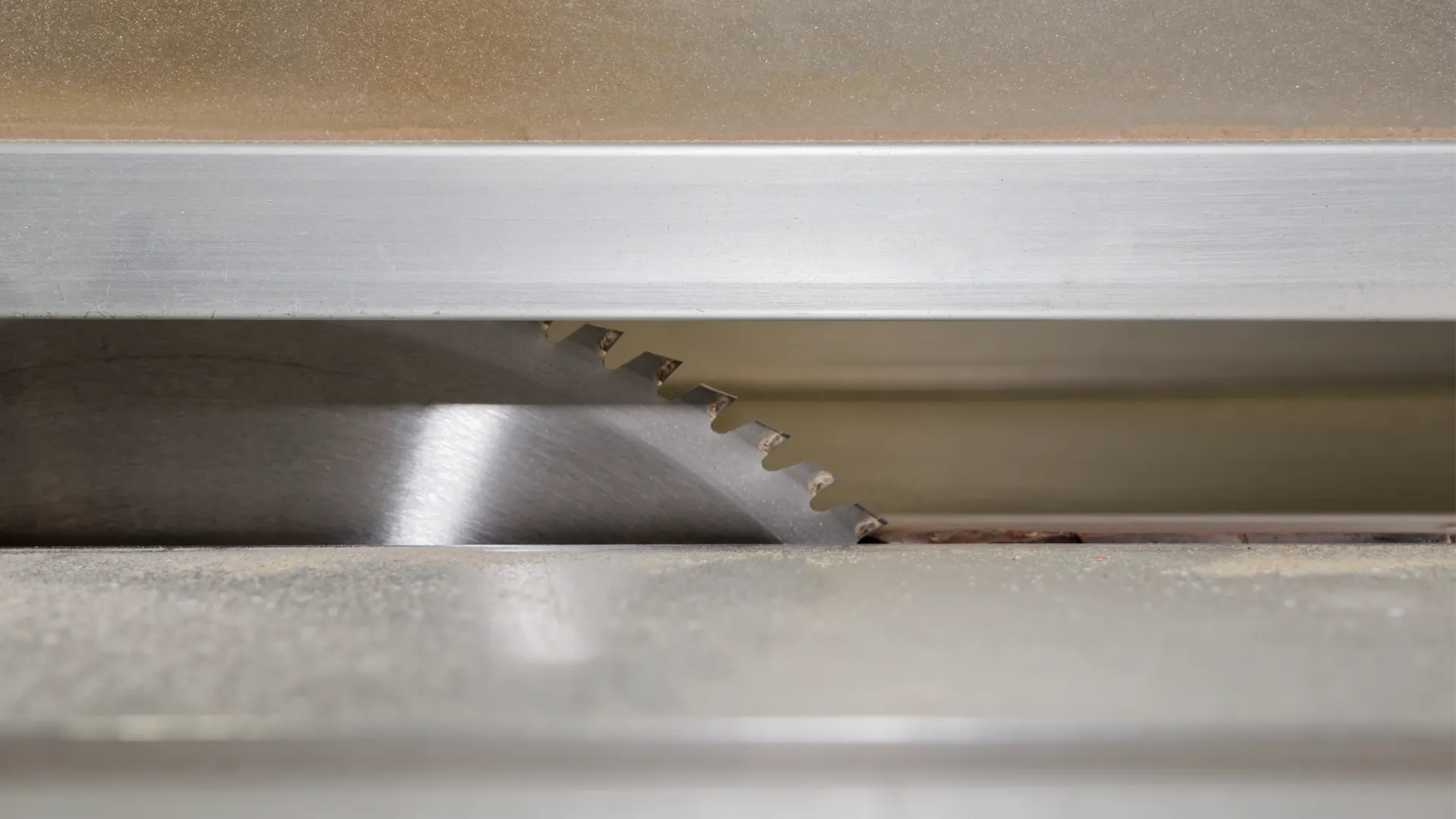
Danny Crawford suffered a below-the-elbow amputation after contacting the exposed blade of a Hobart Model 6614 meat saw.
The negligent-design case focused on the saw’s manually adjustable blade guard and a proposed self-deploying alternative guard.
Expert testimony addressed machine guarding, alternative design, human factors, workplace distraction, and potential safety tradeoffs.
The jury assessed $13.5 million in damages, assigning 70% of the fault to Crawford and 30% to ITW, leaving $4.05 million attributable to ITW.
The Eleventh Circuit affirmed the judgment in 2020, including the admission of the alternative-design engineering testimony.
Machine Guarding
Saws
Workplace Accidents
Worker Safety
Supermarket Safety
Amputation and Replantation
Work Related Injuries
Product Safety
Meat Processing
Danny Crawford suffered a severe workplace injury on February 8, 2015, while using a Hobart Model 6614 vertical band saw in the meat department of a Jacksonville, Florida supermarket. His right arm came into contact with the exposed blade, resulting in an amputation below the elbow. The saw, manufactured by ITW Food Equipment Group, used a blade guard that the operator had to raise and lower manually. Crawford and his wife, Betty Ann Crawford, later sued ITW, alleging that the guarding system did not provide reasonable protection when the guard remained raised during operation.
The dispute moved from Florida state court to the United States District Court for the Middle District of Florida and eventually reached a four-day jury trial. Testimony addressed mechanical design, machine guarding, alternative safety systems, workplace distraction, sanitation, and the conduct of the operator. The jury assessed $13.5 million in total damages, assigned 70% of the fault to Crawford and 30% to ITW, and left $4.05 million attributable to the manufacturer. ITW appealed several trial rulings, but the United States Court of Appeals for the Eleventh Circuit affirmed the judgment on October 21, 2020.
Crawford was working in a Jacksonville supermarket meat department and operating a Hobart Model 6614 vertical band saw. The machine had an adjustable blade guard that the operator had to raise and lower manually. Crawford stepped away from the saw while it remained running, and the guard was left in a raised position. After returning to the work area, he reached near the machine and his right arm contacted the exposed blade, causing an amputation below the elbow.
Danny and Betty Ann Crawford filed suit against ITW Food Equipment Group in Florida state court on October 13, 2016. Their complaint asserted negligence, strict product liability, and loss of consortium arising from the design and operation of the Hobart saw. The allegations included claims concerning the manually adjustable blade guard and whether the machine should have incorporated additional protection against contact with the blade. ITW removed the action to the United States District Court for the Middle District of Florida on November 10, 2016, where discovery and pretrial proceedings examined the saw's design, warnings, operating practices, and possible alternative guarding systems.
The case proceeded to a four-day federal jury trial in May 2018. Crawford withdrew his strict-liability claim during trial, leaving negligent design as the main products claim submitted to the jury. Professor Ralph Barnett testified about saw and guard design and presented an alternative saw closely modeled on the Hobart 6614 with a foot-operated, self-deploying guard that he had designed, built, and tested. Human factors engineer Dr. Mark Edwards addressed workload, attention, distraction, inattentional blindness, and human error associated with workplace conditions.
ITW presented competing technical evidence concerning the existing saw and Barnett's proposed alternative. ITW engineer Brian Bader addressed the Hobart Model 6614, the proposed foot-controlled guard, operational concerns including a possible tripping risk, and the warnings provided on the saw. ITW expert Jack Hyde testified about cleaning and sanitation concerns, including the possibility that the alternative design could transfer bacteria to meat during cutting. After considering the evidence, the jury assigned 70% of the fault to Crawford and 30% to ITW and assessed $13.5 million in total damages, resulting in $4.05 million attributable to ITW.
ITW filed its notice of appeal on March 14, 2019, and the Eleventh Circuit docketed the appeal as No. 19-10964 the following day. The company challenged portions of Barnett's engineering testimony and argued that the evidence did not adequately support the negligent-design verdict. It also contested the admission of OSHA incident reports involving other meat-saw injuries. A separate appellate argument concerned the district court's refusal to give ITW's requested state-of-the-art instruction addressing scientific and technical knowledge available when the Hobart Model 6614 was manufactured.
The United States Court of Appeals for the Eleventh Circuit issued its published decision on October 21, 2020. The majority concluded that the district court acted within its discretion when it admitted Barnett's testimony concerning the alternative guard and found sufficient evidence to support the jury's negligent-design finding. The court also upheld the admission of the OSHA incident evidence. On the requested state-of-the-art instruction, the majority assumed without deciding that the failure to give the instruction may have been error, but concluded that the omission was not reversible and did not require a new trial.
Judge Gerald Tjoflat dissented in part. He disagreed with the majority's treatment of portions of Barnett's testimony and concluded that the state-of-the-art instruction issue warranted a new trial. The majority decision nevertheless affirmed the district court's judgment in full.
Mechanical Engineering and Saw-and-Guard Design Expert Witness - Plaintiff
Professor Ralph Barnett. Barnett addressed the design of the Hobart saw, its adjustable blade guard, and alternative guarding methods. He designed, built, and tested an alternative saw closely modeled on the Hobart 6614 and equipped with a foot-operated, self-deploying guard that returned to a safe position when the operator released the control.
Human Factors Engineering Expert Witness - Plaintiff
Dr. Mark Edwards. Edwards testified about workload, attention, distraction, inattentional blindness, and human error. He also stated that a self-deploying guard could protect against errors that occur when workers become distracted or fail to notice a hazard.
Engineering Expert Witness - Defense
Brian Bader. Bader, an engineer for ITW and an expert witness at trial, addressed the Hobart Model 6614 and Barnett’s proposed alternative design. He testified that the alternative system could create operational issues, including a tripping risk associated with the foot switch, and also discussed the warnings provided on the saw.
Alternative-Design Cleaning and Sanitation Testimony Expert Witness - Defense
Jack Hyde. Hyde, identified by the Eleventh Circuit as an ITW expert, testified that Barnett’s proposed alternative design would be difficult to clean and could create a risk of transferring bacteria to the meat being cut.
The Hobart Model 6614 Used a Manually Adjustable Blade Guard
The blade guard on the Model 6614 had to be raised and lowered manually by the operator. It did not automatically return to a lower position when the operator moved away from the cutting area. Crawford's negligent-design claim focused on the risk created when the guard remained raised and part of the moving blade was exposed. ITW maintained that the Hobart 6614 was reasonably safe and relied on the saw's warnings and manually operated guard as part of its defense.
The Proposed Alternative Guard Was Physically Built and Tested
Barnett developed a working version of his proposed guarding system rather than relying only on drawings or calculations. He modified a saw so that a foot-operated control allowed the guard to move during cutting and return toward a protective position after the operator released the control. The modified machine was tested and presented as part of his testimony. ITW responded with evidence questioning whether the design would work effectively in regular meat-cutting operations and whether it introduced concerns involving cleaning, sanitation, or additional operating risks.
Human Factors Evidence Addressed Workload, Distraction, and Human Error
The trial did not examine machine design in isolation. Testimony also covered the work environment in the meat department, including management duties, employee movement, interruptions, and other demands on Crawford's attention. Edwards discussed how increased workload could affect job performance and how inattentional blindness, distraction, and human error could occur in a busy work environment. The jury heard that evidence alongside testimony about the guard itself and Crawford's conduct before his arm contacted the blade.
The Jury Divided Fault Between Crawford and ITW
The verdict apportioned responsibility rather than assigning the entire loss to one party. Jurors found Crawford 70% at fault and ITW 30% at fault. They assessed total damages of $13.5 million. Applying the jury's allocation resulted in $4.05 million attributable to ITW.
The Eleventh Circuit Reviewed the Alternative-Design Testimony
On appeal, ITW argued that Barnett's proposed guard and the testing behind his opinions did not provide an adequate basis for his testimony. The Eleventh Circuit majority rejected that argument and upheld the district court's decision to admit the evidence. The appellate court concluded that Barnett's construction and testing of a working alternative provided a sufficient method for presenting his opinions to the jury. Disputes over practical limitations, cost, cleaning, utility, and possible additional hazards remained issues for the parties to address through competing testimony and cross-examination.
The litigation moved from a workplace meat-saw injury to state-court filing, federal removal, a jury trial, and a published Eleventh Circuit appeal. At trial, the parties presented competing evidence about the Hobart Model 6614's manually adjustable blade guard, the feasibility of an automatic alternative, Crawford's conduct, and conditions in the meat department. The jury assigned 70% of the fault to Crawford and 30% to ITW, assessed $13.5 million in total damages, and left $4.05 million attributable to the manufacturer. ITW later challenged the negligent-design verdict and several trial rulings, but the Eleventh Circuit affirmed the judgment in October 2020, including the district court's treatment of the engineering testimony and OSHA incident evidence. The majority also concluded that any error associated with the omitted state-of-the-art instruction did not require reversal, leaving the fault allocation and judgment unchanged.

What happened to Danny Crawford while he was using the Hobart Model 6614?
On February 8, 2015, Crawford was operating a Hobart Model 6614 vertical band saw in a Jacksonville, Florida supermarket meat department. He stepped away while the machine remained running and its manually adjustable guard was raised. After returning, he reached near the saw and his right arm contacted the exposed blade. The injury resulted in an amputation below the elbow.
What was the main design issue in Crawford v. ITW Food Equipment Group?
The dispute focused on the Hobart Model 6614's manually adjustable blade guard. Crawford alleged that relying on the operator to reposition the guard did not provide reasonable protection when the guard remained raised. His trial evidence included a proposed self-deploying system that would return the guard toward a protective position after the operator released a foot control.
What alternative blade-guard system was presented during the trial?
Professor Ralph Barnett built and tested a modified saw fitted with a self-deploying guard. The system used a foot-operated control so that the guard could move while the saw was being used and return toward a protective position when the control was released. ITW challenged the practicality of the modification and presented testimony concerning operation, cleaning, sanitation, and other possible risks.
How did the jury allocate fault and damages?
The jury found that both Crawford and ITW contributed to the accident. It assigned 70% of the fault to Crawford and 30% to ITW and assessed $13.5 million in total damages. Based on that allocation, $4.05 million was attributable to ITW.
What did the Eleventh Circuit decide in Crawford v. ITW?
Mechanical Engineering and Saw-and-Guard Design Expert Witness - Plaintiff
Professor Ralph Barnett. Barnett addressed the design of the Hobart saw, its adjustable blade guard, and alternative guarding methods. He designed, built, and tested an alternative saw closely modeled on the Hobart 6614 and equipped with a foot-operated, self-deploying guard that returned to a safe position when the operator released the control.
Human Factors Engineering Expert Witness - Plaintiff
Dr. Mark Edwards. Edwards testified about workload, attention, distraction, inattentional blindness, and human error. He also stated that a self-deploying guard could protect against errors that occur when workers become distracted or fail to notice a hazard.
Engineering Expert Witness - Defense
Brian Bader. Bader, an engineer for ITW and an expert witness at trial, addressed the Hobart Model 6614 and Barnett’s proposed alternative design. He testified that the alternative system could create operational issues, including a tripping risk associated with the foot switch, and also discussed the warnings provided on the saw.
Alternative-Design Cleaning and Sanitation Testimony Expert Witness - Defense
Jack Hyde. Hyde, identified by the Eleventh Circuit as an ITW expert, testified that Barnett’s proposed alternative design would be difficult to clean and could create a risk of transferring bacteria to the meat being cut.
The Hobart Model 6614 Used a Manually Adjustable Blade Guard
The blade guard on the Model 6614 had to be raised and lowered manually by the operator. It did not automatically return to a lower position when the operator moved away from the cutting area. Crawford's negligent-design claim focused on the risk created when the guard remained raised and part of the moving blade was exposed. ITW maintained that the Hobart 6614 was reasonably safe and relied on the saw's warnings and manually operated guard as part of its defense.
The Proposed Alternative Guard Was Physically Built and Tested
Barnett developed a working version of his proposed guarding system rather than relying only on drawings or calculations. He modified a saw so that a foot-operated control allowed the guard to move during cutting and return toward a protective position after the operator released the control. The modified machine was tested and presented as part of his testimony. ITW responded with evidence questioning whether the design would work effectively in regular meat-cutting operations and whether it introduced concerns involving cleaning, sanitation, or additional operating risks.
Human Factors Evidence Addressed Workload, Distraction, and Human Error
The trial did not examine machine design in isolation. Testimony also covered the work environment in the meat department, including management duties, employee movement, interruptions, and other demands on Crawford's attention. Edwards discussed how increased workload could affect job performance and how inattentional blindness, distraction, and human error could occur in a busy work environment. The jury heard that evidence alongside testimony about the guard itself and Crawford's conduct before his arm contacted the blade.
The Jury Divided Fault Between Crawford and ITW
The verdict apportioned responsibility rather than assigning the entire loss to one party. Jurors found Crawford 70% at fault and ITW 30% at fault. They assessed total damages of $13.5 million. Applying the jury's allocation resulted in $4.05 million attributable to ITW.
The Eleventh Circuit Reviewed the Alternative-Design Testimony
On appeal, ITW argued that Barnett's proposed guard and the testing behind his opinions did not provide an adequate basis for his testimony. The Eleventh Circuit majority rejected that argument and upheld the district court's decision to admit the evidence. The appellate court concluded that Barnett's construction and testing of a working alternative provided a sufficient method for presenting his opinions to the jury. Disputes over practical limitations, cost, cleaning, utility, and possible additional hazards remained issues for the parties to address through competing testimony and cross-examination.
The litigation moved from a workplace meat-saw injury to state-court filing, federal removal, a jury trial, and a published Eleventh Circuit appeal. At trial, the parties presented competing evidence about the Hobart Model 6614's manually adjustable blade guard, the feasibility of an automatic alternative, Crawford's conduct, and conditions in the meat department. The jury assigned 70% of the fault to Crawford and 30% to ITW, assessed $13.5 million in total damages, and left $4.05 million attributable to the manufacturer. ITW later challenged the negligent-design verdict and several trial rulings, but the Eleventh Circuit affirmed the judgment in October 2020, including the district court's treatment of the engineering testimony and OSHA incident evidence. The majority also concluded that any error associated with the omitted state-of-the-art instruction did not require reversal, leaving the fault allocation and judgment unchanged.
What happened to Danny Crawford while he was using the Hobart Model 6614?
On February 8, 2015, Crawford was operating a Hobart Model 6614 vertical band saw in a Jacksonville, Florida supermarket meat department. He stepped away while the machine remained running and its manually adjustable guard was raised. After returning, he reached near the saw and his right arm contacted the exposed blade. The injury resulted in an amputation below the elbow.
What was the main design issue in Crawford v. ITW Food Equipment Group?
The dispute focused on the Hobart Model 6614's manually adjustable blade guard. Crawford alleged that relying on the operator to reposition the guard did not provide reasonable protection when the guard remained raised. His trial evidence included a proposed self-deploying system that would return the guard toward a protective position after the operator released a foot control.
What alternative blade-guard system was presented during the trial?
Professor Ralph Barnett built and tested a modified saw fitted with a self-deploying guard. The system used a foot-operated control so that the guard could move while the saw was being used and return toward a protective position when the control was released. ITW challenged the practicality of the modification and presented testimony concerning operation, cleaning, sanitation, and other possible risks.
How did the jury allocate fault and damages?
The jury found that both Crawford and ITW contributed to the accident. It assigned 70% of the fault to Crawford and 30% to ITW and assessed $13.5 million in total damages. Based on that allocation, $4.05 million was attributable to ITW.
What did the Eleventh Circuit decide in Crawford v. ITW?
The Eleventh Circuit affirmed the district court's judgment on October 21, 2020. The majority upheld the admission of Barnett's engineering testimony, found sufficient evidence supporting the negligent-design verdict, and allowed the OSHA incident evidence to stand. On the state-of-the-art instruction, the court assumed without deciding that the omission may have been an error but concluded that it did not amount to reversible error requiring a new trial.
Manufacturing
Metallurgy, +4
Manufacturing
Human Factors, +4
Manufacturing
The Eleventh Circuit affirmed the district court's judgment on October 21, 2020. The majority upheld the admission of Barnett's engineering testimony, found sufficient evidence supporting the negligent-design verdict, and allowed the OSHA incident evidence to stand. On the state-of-the-art instruction, the court assumed without deciding that the omission may have been an error but concluded that it did not amount to reversible error requiring a new trial.