Accident Reconstruction, +4
Transportation
Loading
Transportation
15 min read
Areas of Expertise :
Transportation, Automotive Engineering, Accident Reconstruction, Commercial Vehicles, Failure Analysis

Published Date:
Last Modified Date:
Jurisdiction:
New York State
Before the fatal Schoharie limousine crash on October 6, 2018, New York transportation inspectors had already documented serious safety and compliance problems involving the modified 2001 Ford Excursion operated by Prestige Limousine and Chauffeur Service. The vehicle had been placed out of service, yet it returned to passenger use without completing the required NYSDOT bus inspection. On the day of the crash, the stretch limousine was carrying 17 passengers and a driver when its braking system failed during a steep descent on New York State Route 30. The limousine crossed Route 30A at high speed and struck a parked Toyota Highlander, which was pushed into two pedestrians. The limousine then continued into a ravine. All 18 people inside the vehicle and both pedestrians were killed.
The crash led to an NTSB investigation, state enforcement activity, wrongful-death litigation, and the prosecution of Nauman Hussain, who managed the day-to-day operations of Prestige Limousine. Prosecutors presented evidence that Hussain knew about the Ford Excursion's inspection history, brake problems, operating restrictions, and recommended repairs but continued to use the vehicle for passenger trips. A Schoharie County jury convicted him of 20 counts of second-degree manslaughter on May 17, 2023, and he received concurrent prison terms of 5 to 15 years. The Appellate Division affirmed the judgment in 2024, and the New York Court of Appeals denied leave to appeal in April 2025. Hussain later filed a CPL 440 post-conviction motion in July 2026 seeking to vacate the convictions.
The New York State Department of Transportation inspected Prestige Limousine's modified Ford Excursion and identified multiple equipment and regulatory violations. Brake-related conditions included a constricted hydraulic line leading to the left rear wheel, which appeared to have been intentionally pinched with a vice grip, along with other braking and ABS concerns. NYSDOT placed an out-of-service sticker on the limousine. The vehicle could not lawfully return to commercial passenger service until the cited problems were repaired and the required NYSDOT inspection process was completed.
After brake problems continued, Hussain brought the Ford Excursion to a Mavis Discount Tire location for service. The appellate record states that Mavis replaced the left-rear hydraulic brake hose and caliper, replaced brake pads, and bled the system after transmission fluid had entered the brake system. Hussain then asked Mavis to inspect the limousine, and the shop issued a DMV inspection sticker even though it was not authorized to inspect a vehicle of that size and passenger capacity under the ordinary DMV program. Other violations previously identified by NYSDOT remained unresolved.
Hussain returned the limousine to Mavis during June and July after experiencing continued problems with the brake pedal. The trial record later showed that Mavis warned the contaminated braking system needed additional work and that internal components could fail. Mavis recommended replacing all four calipers and other components, but Hussain authorized more limited repairs. The limousine continued to be used for passenger transportation after those visits.
About one month before the crash, NYSDOT inspected the limousine again and documented numerous violations, including conditions that had already appeared during the March inspection. Another out-of-service sticker was placed on the vehicle. Hussain was advised that the violations had to be corrected before the limousine could operate on New York roads and that it still required a DOT bus inspection. Post-crash examination later showed that several of the cited defects had not been repaired.
The Ford Excursion was carrying 17 passengers and driver Scott Lisinicchia when it descended the steep section of Route 30 toward Route 30A in Schoharie. The braking system could no longer control the limousine's speed. The NTSB estimated that the vehicle was traveling approximately 101 to 118 mph when it struck an unoccupied Toyota Highlander near the Apple Barrel Country Store. The impact pushed the Highlander into two pedestrians, and the limousine continued into a ravine before striking an embankment and trees. All 18 limousine occupants and both pedestrians were killed.
New York State Police arrested Hussain four days after the crash. He had been handling the daily operations of Prestige Limousine while his father, Shahed Hussain, was outside the United States. Investigators reviewed maintenance records, inspection history, transportation violations, and Hussain's communications with regulators and repair personnel. Hussain initially faced homicide charges based on alleged negligence before the case proceeded to a grand jury.
A Schoharie County grand jury returned an indictment on April 5, 2019, charging Hussain with 20 counts of second-degree manslaughter and 20 additional homicide counts alleging negligence under New York law. The charges corresponded to the 20 deaths caused by the crash. Prosecutors alleged that Hussain knew about the limousine's mechanical condition and operating restrictions but continued to use it for passenger trips. Hussain pleaded not guilty to the indictment at his April 10 arraignment.
Representatives of the victims' estates filed lawsuits against parties connected to the ownership, operation, maintenance, and inspection of the limousine. The New York Litigation Coordination Panel ordered the cases coordinated in Albany County for pretrial discovery and motion practice. Defendants included members of the Hussain family and entities associated with Prestige Limousine, along with Mavis Discount Tire and related companies. Some plaintiffs also asserted claims against the Apple Barrel Country Store and the estate of the limousine driver.
The National Transportation Safety Board completed its investigation of the Ford Excursion's braking system, maintenance history, vehicle modifications, inspections, roadway conditions, and regulatory oversight. The NTSB determined that Prestige Limousine dispatched the stretch limousine while it was under an out-of-service order, leading to brake-system failure during the Route 30 descent. The agency also identified ineffective NYSDOT oversight, inadequate repair verification, and deficiencies in DMV oversight and vehicle registration as contributing factors. The roadway itself was not identified as a cause; the NTSB found adequate warning, visibility, and stopping sight distance.
Mavis Discount Tire and related entities sought dismissal of negligence, gross-negligence, punitive-damages, and cross claims in twelve coordinated wrongful-death actions. The Supreme Court of New York, Albany County, denied the motion. The court concluded that the plaintiffs had alleged enough facts at the pleading stage to continue pursuing claims related to Mavis's maintenance and inspection of the limousine. The ruling allowed those claims to proceed but did not decide whether Mavis was ultimately liable.
Hussain entered a negotiated guilty plea to 20 homicide counts alleging negligence under New York law, resolving the indictment at that stage. The agreement called for two years of interim probation and 1,000 hours of community service, followed by a five-year probationary sentence with credit for the interim period. County Court Judge George R. Bartlett III accepted the plea. Judge Bartlett later retired, and the case was reassigned in July 2022.
After the reassignment, Supreme Court Justice Peter A. Lynch advised Hussain that he would not follow the probationary disposition contemplated by the earlier agreement. Hussain was allowed to withdraw the plea rather than proceed under a different sentencing position. The original charges were restored, and the case returned to the trial calendar. The circumstances surrounding the plea withdrawal later became part of Hussain's appeal.
In Cavosie v. Hussain, the Appellate Division, Third Department affirmed the lower court's refusal to dismiss claims against the Mavis defendants. The court held that the plaintiffs had adequately pleaded theories involving duty, negligence, fraudulent misrepresentation, aiding and abetting fraud, proximate causation, and punitive damages. The decision did not establish that those claims had been proven. The coordinated civil cases continued after the ruling.
Hussain's trial examined his knowledge of the Ford Excursion's mechanical condition, Prestige Limousine's inspection and maintenance practices, prior NYSDOT warnings, and decisions concerning recommended brake repairs. Brian Chase, a vehicle-forensics consultant retained by the New York State Police, testified for the prosecution about the limousine's braking system and the sequence of mechanical failures that developed during the Route 30 descent. The jury convicted Hussain on all 20 counts of second-degree manslaughter. The verdict found that his conduct satisfied New York's legal standard for recklessly causing the deaths.
Justice Lynch sentenced Hussain to an indeterminate prison term of 5 to 15 years on each manslaughter conviction. All 20 sentences were ordered to run concurrently, resulting in an aggregate term of 5 to 15 years. Hussain appealed the judgment to the Appellate Division. His arguments included challenges to the evidence supporting recklessness and causation, the handling of his earlier plea, and the sentence imposed.
Families of several crash victims reached settlement agreements with Mavis Discount Tire after years of coordinated civil proceedings. By late June 2023, court records reflected settlements involving four victims' estates, with the financial terms kept confidential. Other estates continued pursuing their claims. The agreements resolved individual civil actions without a trial verdict determining Mavis's liability.
The New York Appellate Division, Third Department affirmed all 20 second-degree manslaughter convictions. The court concluded that the evidence allowed the jury to find that Hussain knew about the limousine's deteriorating braking system and consciously disregarded a substantial and unjustifiable risk by avoiding the required inspection, declining recommended repairs, and continuing to place the vehicle into service. It also upheld the causation finding and rejected Hussain's argument that conduct attributed to Mavis amounted to an independent intervening cause. His concurrent 5-to-15-year prison terms remained in place.
After the Third Department affirmed the judgment, Hussain sought permission to appeal to New York's highest court. The Court of Appeals denied leave on April 10, 2025. That ruling ended this route of direct appellate review of the 2023 judgment. The manslaughter convictions and sentence remained in effect.
Hussain, represented by new counsel, filed a CPL 440 motion under Article 440 of New York's procedural code seeking to vacate his convictions. The motion raises claims including ineffective assistance of counsel and asserted new evidence concerning the limousine's prior safety history, events involving Mavis, and other aspects of the prosecution. These arguments remain defense claims unless and until a court accepts them. As of August 2026, the motion had not resulted in the convictions being overturned.
By August 2026, Mavis Discount Tire had reached settlements with the estates of 19 of the 20 people killed in the crash. The remaining wrongful-death claim against Mavis was brought by the estate of passenger Michael Ukaj. Court of Claims actions seeking recovery from New York State had also been discontinued. Many settlement terms remained confidential, and no trial verdict had imposed civil liability on Mavis.
Court:
Supreme Court of the State of New York, Schoharie County
Case Name:
People of the State of New York v. Nauman Hussain
Limousine
Brake Failure
Brakes
Automotive Accidents
Automotive Repair
Fleet Maintenance
Mechanical Inspections
Mechanical Failure
Transportation Safety
State Vehicle Code Compliance
Before the fatal Schoharie limousine crash on October 6, 2018, New York transportation inspectors had already documented serious safety and compliance problems involving the modified 2001 Ford Excursion operated by Prestige Limousine and Chauffeur Service. The vehicle had been placed out of service, yet it returned to passenger use without completing the required NYSDOT bus inspection. On the day of the crash, the stretch limousine was carrying 17 passengers and a driver when its braking system failed during a steep descent on New York State Route 30. The limousine crossed Route 30A at high speed and struck a parked Toyota Highlander, which was pushed into two pedestrians. The limousine then continued into a ravine. All 18 people inside the vehicle and both pedestrians were killed.
The crash led to an NTSB investigation, state enforcement activity, wrongful-death litigation, and the prosecution of Nauman Hussain, who managed the day-to-day operations of Prestige Limousine. Prosecutors presented evidence that Hussain knew about the Ford Excursion's inspection history, brake problems, operating restrictions, and recommended repairs but continued to use the vehicle for passenger trips. A Schoharie County jury convicted him of 20 counts of second-degree manslaughter on May 17, 2023, and he received concurrent prison terms of 5 to 15 years. The Appellate Division affirmed the judgment in 2024, and the New York Court of Appeals denied leave to appeal in April 2025. Hussain later filed a CPL 440 post-conviction motion in July 2026 seeking to vacate the convictions.
The New York State Department of Transportation inspected Prestige Limousine's modified Ford Excursion and identified multiple equipment and regulatory violations. Brake-related conditions included a constricted hydraulic line leading to the left rear wheel, which appeared to have been intentionally pinched with a vice grip, along with other braking and ABS concerns. NYSDOT placed an out-of-service sticker on the limousine. The vehicle could not lawfully return to commercial passenger service until the cited problems were repaired and the required NYSDOT inspection process was completed.
After brake problems continued, Hussain brought the Ford Excursion to a Mavis Discount Tire location for service. The appellate record states that Mavis replaced the left-rear hydraulic brake hose and caliper, replaced brake pads, and bled the system after transmission fluid had entered the brake system. Hussain then asked Mavis to inspect the limousine, and the shop issued a DMV inspection sticker even though it was not authorized to inspect a vehicle of that size and passenger capacity under the ordinary DMV program. Other violations previously identified by NYSDOT remained unresolved.
Hussain returned the limousine to Mavis during June and July after experiencing continued problems with the brake pedal. The trial record later showed that Mavis warned the contaminated braking system needed additional work and that internal components could fail. Mavis recommended replacing all four calipers and other components, but Hussain authorized more limited repairs. The limousine continued to be used for passenger transportation after those visits.
About one month before the crash, NYSDOT inspected the limousine again and documented numerous violations, including conditions that had already appeared during the March inspection. Another out-of-service sticker was placed on the vehicle. Hussain was advised that the violations had to be corrected before the limousine could operate on New York roads and that it still required a DOT bus inspection. Post-crash examination later showed that several of the cited defects had not been repaired.
The Ford Excursion was carrying 17 passengers and driver Scott Lisinicchia when it descended the steep section of Route 30 toward Route 30A in Schoharie. The braking system could no longer control the limousine's speed. The NTSB estimated that the vehicle was traveling approximately 101 to 118 mph when it struck an unoccupied Toyota Highlander near the Apple Barrel Country Store. The impact pushed the Highlander into two pedestrians, and the limousine continued into a ravine before striking an embankment and trees. All 18 limousine occupants and both pedestrians were killed.
New York State Police arrested Hussain four days after the crash. He had been handling the daily operations of Prestige Limousine while his father, Shahed Hussain, was outside the United States. Investigators reviewed maintenance records, inspection history, transportation violations, and Hussain's communications with regulators and repair personnel. Hussain initially faced homicide charges based on alleged negligence before the case proceeded to a grand jury.
A Schoharie County grand jury returned an indictment on April 5, 2019, charging Hussain with 20 counts of second-degree manslaughter and 20 additional homicide counts alleging negligence under New York law. The charges corresponded to the 20 deaths caused by the crash. Prosecutors alleged that Hussain knew about the limousine's mechanical condition and operating restrictions but continued to use it for passenger trips. Hussain pleaded not guilty to the indictment at his April 10 arraignment.
Representatives of the victims' estates filed lawsuits against parties connected to the ownership, operation, maintenance, and inspection of the limousine. The New York Litigation Coordination Panel ordered the cases coordinated in Albany County for pretrial discovery and motion practice. Defendants included members of the Hussain family and entities associated with Prestige Limousine, along with Mavis Discount Tire and related companies. Some plaintiffs also asserted claims against the Apple Barrel Country Store and the estate of the limousine driver.
The National Transportation Safety Board completed its investigation of the Ford Excursion's braking system, maintenance history, vehicle modifications, inspections, roadway conditions, and regulatory oversight. The NTSB determined that Prestige Limousine dispatched the stretch limousine while it was under an out-of-service order, leading to brake-system failure during the Route 30 descent. The agency also identified ineffective NYSDOT oversight, inadequate repair verification, and deficiencies in DMV oversight and vehicle registration as contributing factors. The roadway itself was not identified as a cause; the NTSB found adequate warning, visibility, and stopping sight distance.
Mavis Discount Tire and related entities sought dismissal of negligence, gross-negligence, punitive-damages, and cross claims in twelve coordinated wrongful-death actions. The Supreme Court of New York, Albany County, denied the motion. The court concluded that the plaintiffs had alleged enough facts at the pleading stage to continue pursuing claims related to Mavis's maintenance and inspection of the limousine. The ruling allowed those claims to proceed but did not decide whether Mavis was ultimately liable.
Hussain entered a negotiated guilty plea to 20 homicide counts alleging negligence under New York law, resolving the indictment at that stage. The agreement called for two years of interim probation and 1,000 hours of community service, followed by a five-year probationary sentence with credit for the interim period. County Court Judge George R. Bartlett III accepted the plea. Judge Bartlett later retired, and the case was reassigned in July 2022.
After the reassignment, Supreme Court Justice Peter A. Lynch advised Hussain that he would not follow the probationary disposition contemplated by the earlier agreement. Hussain was allowed to withdraw the plea rather than proceed under a different sentencing position. The original charges were restored, and the case returned to the trial calendar. The circumstances surrounding the plea withdrawal later became part of Hussain's appeal.
In Cavosie v. Hussain, the Appellate Division, Third Department affirmed the lower court's refusal to dismiss claims against the Mavis defendants. The court held that the plaintiffs had adequately pleaded theories involving duty, negligence, fraudulent misrepresentation, aiding and abetting fraud, proximate causation, and punitive damages. The decision did not establish that those claims had been proven. The coordinated civil cases continued after the ruling.
Hussain's trial examined his knowledge of the Ford Excursion's mechanical condition, Prestige Limousine's inspection and maintenance practices, prior NYSDOT warnings, and decisions concerning recommended brake repairs. Brian Chase, a vehicle-forensics consultant retained by the New York State Police, testified for the prosecution about the limousine's braking system and the sequence of mechanical failures that developed during the Route 30 descent. The jury convicted Hussain on all 20 counts of second-degree manslaughter. The verdict found that his conduct satisfied New York's legal standard for recklessly causing the deaths.
Justice Lynch sentenced Hussain to an indeterminate prison term of 5 to 15 years on each manslaughter conviction. All 20 sentences were ordered to run concurrently, resulting in an aggregate term of 5 to 15 years. Hussain appealed the judgment to the Appellate Division. His arguments included challenges to the evidence supporting recklessness and causation, the handling of his earlier plea, and the sentence imposed.
Families of several crash victims reached settlement agreements with Mavis Discount Tire after years of coordinated civil proceedings. By late June 2023, court records reflected settlements involving four victims' estates, with the financial terms kept confidential. Other estates continued pursuing their claims. The agreements resolved individual civil actions without a trial verdict determining Mavis's liability.
The New York Appellate Division, Third Department affirmed all 20 second-degree manslaughter convictions. The court concluded that the evidence allowed the jury to find that Hussain knew about the limousine's deteriorating braking system and consciously disregarded a substantial and unjustifiable risk by avoiding the required inspection, declining recommended repairs, and continuing to place the vehicle into service. It also upheld the causation finding and rejected Hussain's argument that conduct attributed to Mavis amounted to an independent intervening cause. His concurrent 5-to-15-year prison terms remained in place.
After the Third Department affirmed the judgment, Hussain sought permission to appeal to New York's highest court. The Court of Appeals denied leave on April 10, 2025. That ruling ended this route of direct appellate review of the 2023 judgment. The manslaughter convictions and sentence remained in effect.
Hussain, represented by new counsel, filed a CPL 440 motion under Article 440 of New York's procedural code seeking to vacate his convictions. The motion raises claims including ineffective assistance of counsel and asserted new evidence concerning the limousine's prior safety history, events involving Mavis, and other aspects of the prosecution. These arguments remain defense claims unless and until a court accepts them. As of August 2026, the motion had not resulted in the convictions being overturned.
By August 2026, Mavis Discount Tire had reached settlements with the estates of 19 of the 20 people killed in the crash. The remaining wrongful-death claim against Mavis was brought by the estate of passenger Michael Ukaj. Court of Claims actions seeking recovery from New York State had also been discontinued. Many settlement terms remained confidential, and no trial verdict had imposed civil liability on Mavis.
Prosecution Side: Brian Chase, a vehicle-forensics consultant retained by the New York State Police, testified for the prosecution during Hussain's 2023 trial. His analysis addressed the Ford Excursion's braking system and the sequence of mechanical failures that developed during the Route 30 descent. Chase testified that a rear brake line failed and that the front brakes then carried a greater share of the braking demand until they could no longer slow the limousine effectively. The Appellate Division later described the prosecution's uncontroverted expert testimony when reviewing the mechanical cause of the crash.
In a case involving a high-speed loss of braking, an accident reconstruction expert may examine vehicle speed, travel path, steering input, braking distance, collision sequence, and post-impact movement. The Schoharie investigation included estimates of the limousine's speed as it crossed Route 30A and analysis of its path after striking the Toyota Highlander. Similar reconstruction work can help explain the physical sequence of the collision and distinguish the effects of mechanical failure from the driver's available response.
A civil engineering expert may evaluate roadway grade, alignment, intersection geometry, signage, stopping sight distance, and other physical features that affect vehicle movement and braking demands. In the Schoharie crash, Route 30's steep descent formed part of the technical analysis because the grade increased the load placed on the limousine's braking system. The NTSB found adequate warning signs, visibility, and stopping sight distance, so deficient roadway design was not identified as a contributing cause.
An automobile accidents expert witness may evaluate the mechanical, operational, and physical factors surrounding a vehicle crash, including braking performance, vehicle condition, speed, roadway grade, driver response, and collision dynamics. In the Schoharie limousine crash, this type of analysis could address how the Ford Excursion's deteriorating braking system affected the driver's ability to control the vehicle during the steep Route 30 descent. The expert may also review inspection records, repair history, accident evidence, and vehicle-forensics findings to explain how mechanical and operational conditions contributed to the crash.
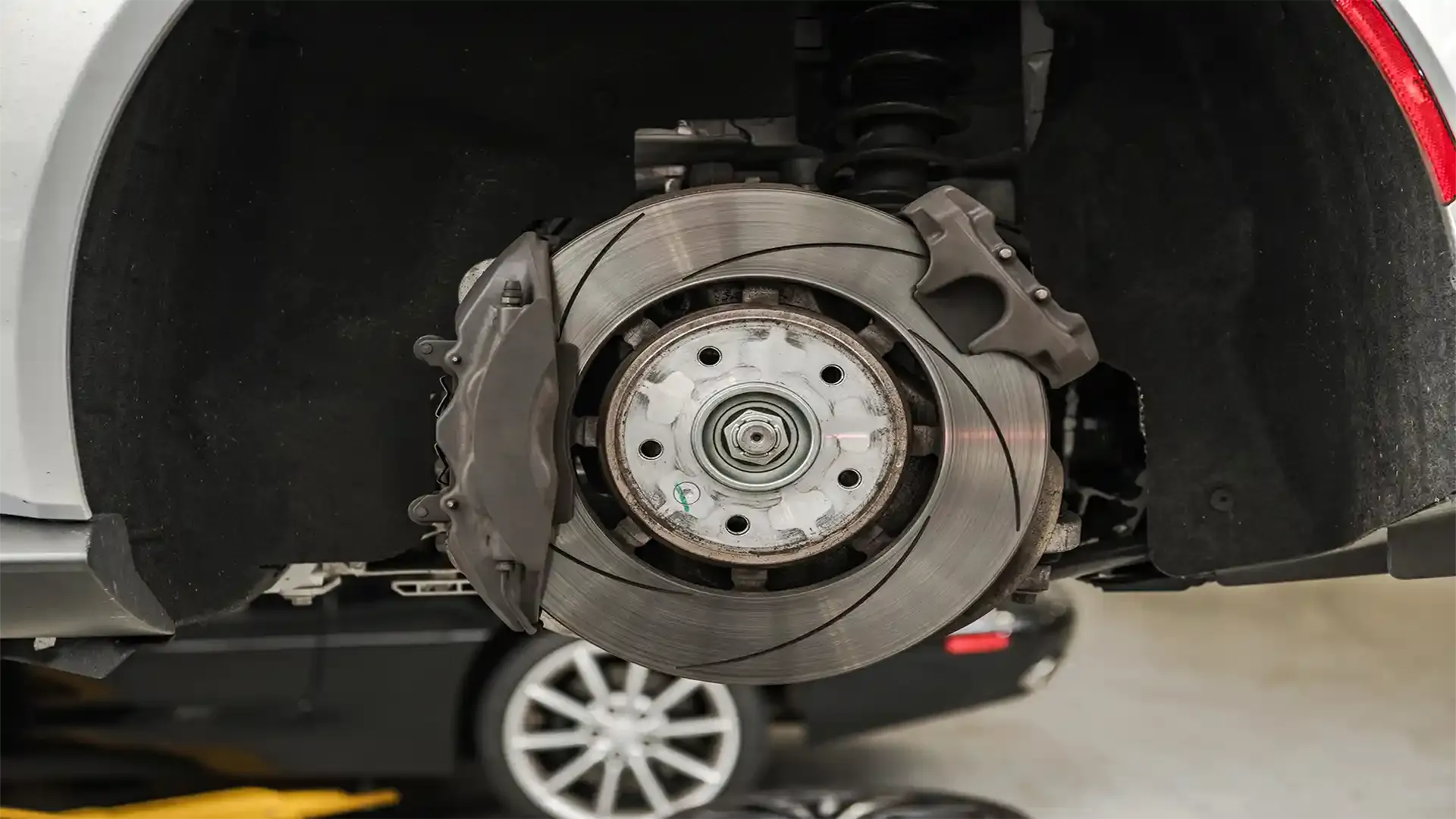
The loss of braking was not traced to a single isolated defect. Trial evidence showed that the right-rear brake was already inoperable because its caliper pistons were seized, while the left-rear brake had reduced effectiveness from substantial wear. During the Route 30 descent, a corroded steel brake line fractured, leaving the rear brakes unable to provide effective stopping force. The remaining front brakes then carried more of the braking demand until they could no longer control the vehicle's speed.
The Ford Excursion had been substantially modified from its original SUV configuration and was used as a for-hire vehicle carrying a larger number of passengers. That classification placed it under inspection requirements different from those that applied to ordinary passenger vehicles. The appellate record states that Hussain had been advised that the limousine required a NYSDOT bus inspection. The record also states that the vehicle did not receive that inspection before the fatal trip.
NYSDOT placed out-of-service stickers on the limousine during the March and September 2018 inspections. Removing a sticker did not eliminate the underlying defects or satisfy the inspection requirements imposed by the state. After the September inspection, Hussain was told that the violations had to be corrected before the limousine could operate on New York roadways. The most recent out-of-service sticker was later found crumpled inside his personal vehicle.
The prosecution against Hussain required proof beyond a reasonable doubt that his conduct met the elements of second-degree manslaughter, including recklessness and causation. The wrongful-death claims against Mavis applied civil standards and involved allegations concerning repair work, inspection practices, negligence, fraud, and causation. The Appellate Division's decision allowing the Mavis claims to continue did not establish civil liability. Most of those claims were later resolved through settlements rather than a trial verdict.
The Third Department affirmed Hussain's manslaughter convictions in November 2024, and the New York Court of Appeals denied leave to appeal in April 2025. That ended the available direct appellate route described in the published decisions. Hussain later filed a CPL 440 motion seeking post-conviction relief on separate grounds. The filing of that motion did not suspend or overturn the existing judgment, which remained in effect as of August 2026.
By 2026, the Schoharie proceedings had produced a detailed record involving mechanical failure, regulatory violations, manslaughter charges, appellate review, and civil claims. The NTSB attributed the crash to the decision to dispatch the out-of-service limousine and the resulting brake-system failure. Hussain was later convicted of 20 counts of second-degree manslaughter, sentenced to 5 to 15 years, and unsuccessful in obtaining further direct appellate review after the Court of Appeals denied leave in April 2025. His July 2026 CPL 440 motion remained pending, while the convictions and sentence stayed in force. Most wrongful-death claims against Mavis had also been resolved through confidential settlements, leaving one estate's claim unresolved as of August 26, 2026.

What happened in the Schoharie limousine crash?
On October 6, 2018, a modified 2001 Ford Excursion stretch limousine lost effective braking while descending Route 30 in Schoharie, New York. The vehicle crossed Route 30A and struck a parked Toyota Highlander at an estimated 101 to 118 mph. The Highlander was pushed into two pedestrians, and the limousine continued into a ravine. The crash killed the 17 passengers, the limousine driver, and both pedestrians.
What caused the Schoharie limousine crash?
The NTSB determined that Prestige Limousine dispatched the stretch limousine despite an out-of-service order and unresolved safety problems. The braking system failed during the Route 30 descent, preventing the vehicle from slowing effectively. The agency also identified deficiencies in state transportation oversight, repair verification, vehicle registration, and inspection procedures as contributing factors.
Why was Nauman Hussain convicted of second-degree manslaughter?
Prosecutors presented evidence that Hussain knew about the limousine's brake problems, prior out-of-service orders, DOT inspection requirements, and recommended repairs but continued to use the vehicle for passenger trips. The jury found that he consciously disregarded a substantial and unjustifiable risk and recklessly caused the 20 deaths. The Third Department later concluded that the evidence was legally sufficient to support those findings.
What role did Mavis Discount Tire have in the Schoharie litigation?
Mavis performed brake-related work on the Ford Excursion and issued a DMV inspection sticker before the crash. Victims' estates later alleged that its maintenance and inspection practices contributed to the limousine remaining in service. Courts allowed negligence, fraud, punitive-damages, and related claims to proceed, but those rulings did not establish final liability. By August 2026, Mavis had settled with 19 of the 20 victims' estates, leaving the Michael Ukaj estate's claim unresolved.
Prosecution Side: Brian Chase, a vehicle-forensics consultant retained by the New York State Police, testified for the prosecution during Hussain's 2023 trial. His analysis addressed the Ford Excursion's braking system and the sequence of mechanical failures that developed during the Route 30 descent. Chase testified that a rear brake line failed and that the front brakes then carried a greater share of the braking demand until they could no longer slow the limousine effectively. The Appellate Division later described the prosecution's uncontroverted expert testimony when reviewing the mechanical cause of the crash.
In a case involving a high-speed loss of braking, an accident reconstruction expert may examine vehicle speed, travel path, steering input, braking distance, collision sequence, and post-impact movement. The Schoharie investigation included estimates of the limousine's speed as it crossed Route 30A and analysis of its path after striking the Toyota Highlander. Similar reconstruction work can help explain the physical sequence of the collision and distinguish the effects of mechanical failure from the driver's available response.
A civil engineering expert may evaluate roadway grade, alignment, intersection geometry, signage, stopping sight distance, and other physical features that affect vehicle movement and braking demands. In the Schoharie crash, Route 30's steep descent formed part of the technical analysis because the grade increased the load placed on the limousine's braking system. The NTSB found adequate warning signs, visibility, and stopping sight distance, so deficient roadway design was not identified as a contributing cause.
An automobile accidents expert witness may evaluate the mechanical, operational, and physical factors surrounding a vehicle crash, including braking performance, vehicle condition, speed, roadway grade, driver response, and collision dynamics. In the Schoharie limousine crash, this type of analysis could address how the Ford Excursion's deteriorating braking system affected the driver's ability to control the vehicle during the steep Route 30 descent. The expert may also review inspection records, repair history, accident evidence, and vehicle-forensics findings to explain how mechanical and operational conditions contributed to the crash.
The loss of braking was not traced to a single isolated defect. Trial evidence showed that the right-rear brake was already inoperable because its caliper pistons were seized, while the left-rear brake had reduced effectiveness from substantial wear. During the Route 30 descent, a corroded steel brake line fractured, leaving the rear brakes unable to provide effective stopping force. The remaining front brakes then carried more of the braking demand until they could no longer control the vehicle's speed.
The Ford Excursion had been substantially modified from its original SUV configuration and was used as a for-hire vehicle carrying a larger number of passengers. That classification placed it under inspection requirements different from those that applied to ordinary passenger vehicles. The appellate record states that Hussain had been advised that the limousine required a NYSDOT bus inspection. The record also states that the vehicle did not receive that inspection before the fatal trip.
NYSDOT placed out-of-service stickers on the limousine during the March and September 2018 inspections. Removing a sticker did not eliminate the underlying defects or satisfy the inspection requirements imposed by the state. After the September inspection, Hussain was told that the violations had to be corrected before the limousine could operate on New York roadways. The most recent out-of-service sticker was later found crumpled inside his personal vehicle.
The prosecution against Hussain required proof beyond a reasonable doubt that his conduct met the elements of second-degree manslaughter, including recklessness and causation. The wrongful-death claims against Mavis applied civil standards and involved allegations concerning repair work, inspection practices, negligence, fraud, and causation. The Appellate Division's decision allowing the Mavis claims to continue did not establish civil liability. Most of those claims were later resolved through settlements rather than a trial verdict.
The Third Department affirmed Hussain's manslaughter convictions in November 2024, and the New York Court of Appeals denied leave to appeal in April 2025. That ended the available direct appellate route described in the published decisions. Hussain later filed a CPL 440 motion seeking post-conviction relief on separate grounds. The filing of that motion did not suspend or overturn the existing judgment, which remained in effect as of August 2026.
By 2026, the Schoharie proceedings had produced a detailed record involving mechanical failure, regulatory violations, manslaughter charges, appellate review, and civil claims. The NTSB attributed the crash to the decision to dispatch the out-of-service limousine and the resulting brake-system failure. Hussain was later convicted of 20 counts of second-degree manslaughter, sentenced to 5 to 15 years, and unsuccessful in obtaining further direct appellate review after the Court of Appeals denied leave in April 2025. His July 2026 CPL 440 motion remained pending, while the convictions and sentence stayed in force. Most wrongful-death claims against Mavis had also been resolved through confidential settlements, leaving one estate's claim unresolved as of August 26, 2026.
What happened in the Schoharie limousine crash?
On October 6, 2018, a modified 2001 Ford Excursion stretch limousine lost effective braking while descending Route 30 in Schoharie, New York. The vehicle crossed Route 30A and struck a parked Toyota Highlander at an estimated 101 to 118 mph. The Highlander was pushed into two pedestrians, and the limousine continued into a ravine. The crash killed the 17 passengers, the limousine driver, and both pedestrians.
What caused the Schoharie limousine crash?
The NTSB determined that Prestige Limousine dispatched the stretch limousine despite an out-of-service order and unresolved safety problems. The braking system failed during the Route 30 descent, preventing the vehicle from slowing effectively. The agency also identified deficiencies in state transportation oversight, repair verification, vehicle registration, and inspection procedures as contributing factors.
Why was Nauman Hussain convicted of second-degree manslaughter?
Prosecutors presented evidence that Hussain knew about the limousine's brake problems, prior out-of-service orders, DOT inspection requirements, and recommended repairs but continued to use the vehicle for passenger trips. The jury found that he consciously disregarded a substantial and unjustifiable risk and recklessly caused the 20 deaths. The Third Department later concluded that the evidence was legally sufficient to support those findings.
What role did Mavis Discount Tire have in the Schoharie litigation?
Mavis performed brake-related work on the Ford Excursion and issued a DMV inspection sticker before the crash. Victims' estates later alleged that its maintenance and inspection practices contributed to the limousine remaining in service. Courts allowed negligence, fraud, punitive-damages, and related claims to proceed, but those rulings did not establish final liability. By August 2026, Mavis had settled with 19 of the 20 victims' estates, leaving the Michael Ukaj estate's claim unresolved.
What is the current status of Nauman Hussain's convictions?
The Appellate Division affirmed Hussain's 20 second-degree manslaughter convictions on November 7, 2024, and the New York Court of Appeals denied leave to appeal on April 10, 2025. Hussain filed a CPL 440 motion on July 7, 2026, asking the trial court to vacate the judgment based on claims including ineffective assistance of counsel and newly asserted evidence. As of August 2026, the motion remained pending and the 5-to-15-year sentence remained in effect.
Traffic Engineering, +3
Transportation
Traffic Engineering, +4
Transportation
What is the current status of Nauman Hussain's convictions?
The Appellate Division affirmed Hussain's 20 second-degree manslaughter convictions on November 7, 2024, and the New York Court of Appeals denied leave to appeal on April 10, 2025. Hussain filed a CPL 440 motion on July 7, 2026, asking the trial court to vacate the judgment based on claims including ineffective assistance of counsel and newly asserted evidence. As of August 2026, the motion remained pending and the 5-to-15-year sentence remained in effect.